
 HardscapingView full size
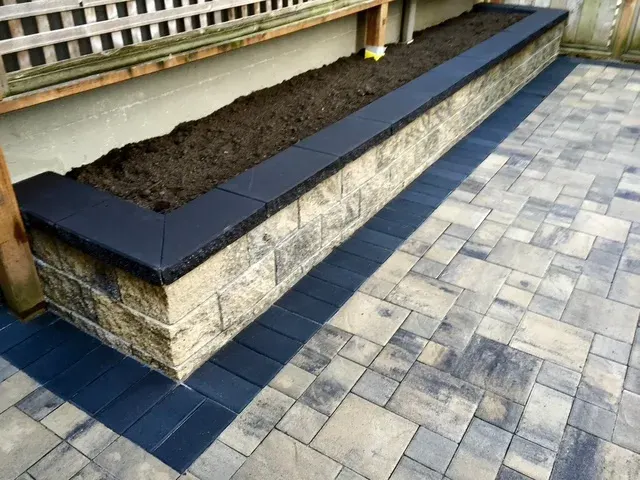
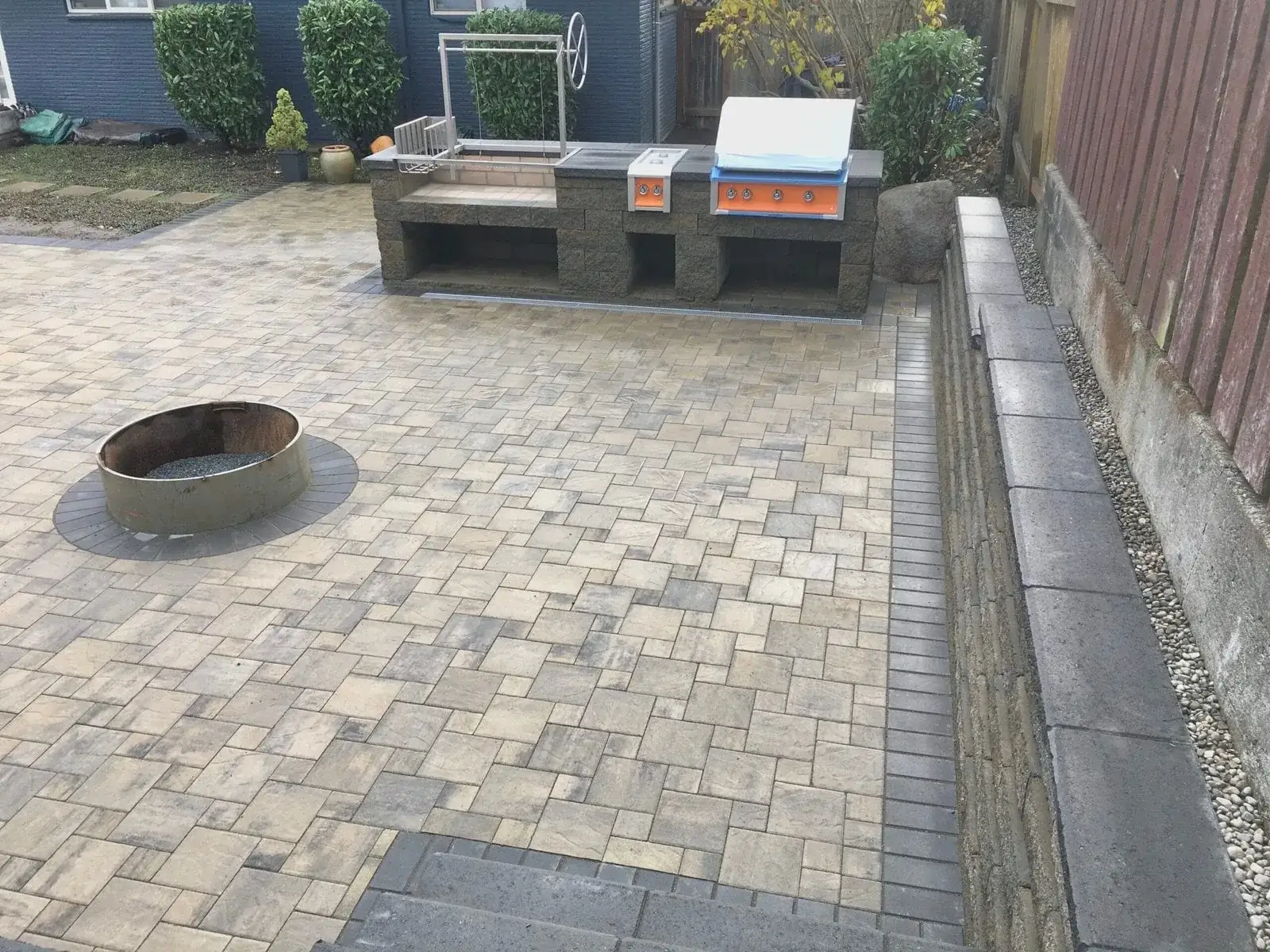
Capped raised planter on a paver terrace
A raised planter running the length of the terrace, capped in charcoal to pick up the darker banding in the paving.
No down payment. You pay when the project is finished.
Monday – Friday, 9:00 AM – 7:00 PM · Capitol Hill, Seattle
Paver Patios · West Seattle
Which half of West Seattle you live on decides what kind of patio project this is. On the plateau through the Junction, Westwood and Arbor Heights, it is straightforward Seattle work: glacial till, a properly excavated and compacted free-draining base, falls set to shed water away from the house. On the bluff toward Alki, Fauntleroy and down the Delridge side it is a different proposition. That ground has documented slide history and a large share of those parcels carry steep slope or landslide-prone designations, which means adding an impermeable surface and changing where runoff goes are structural decisions rather than aesthetic ones.
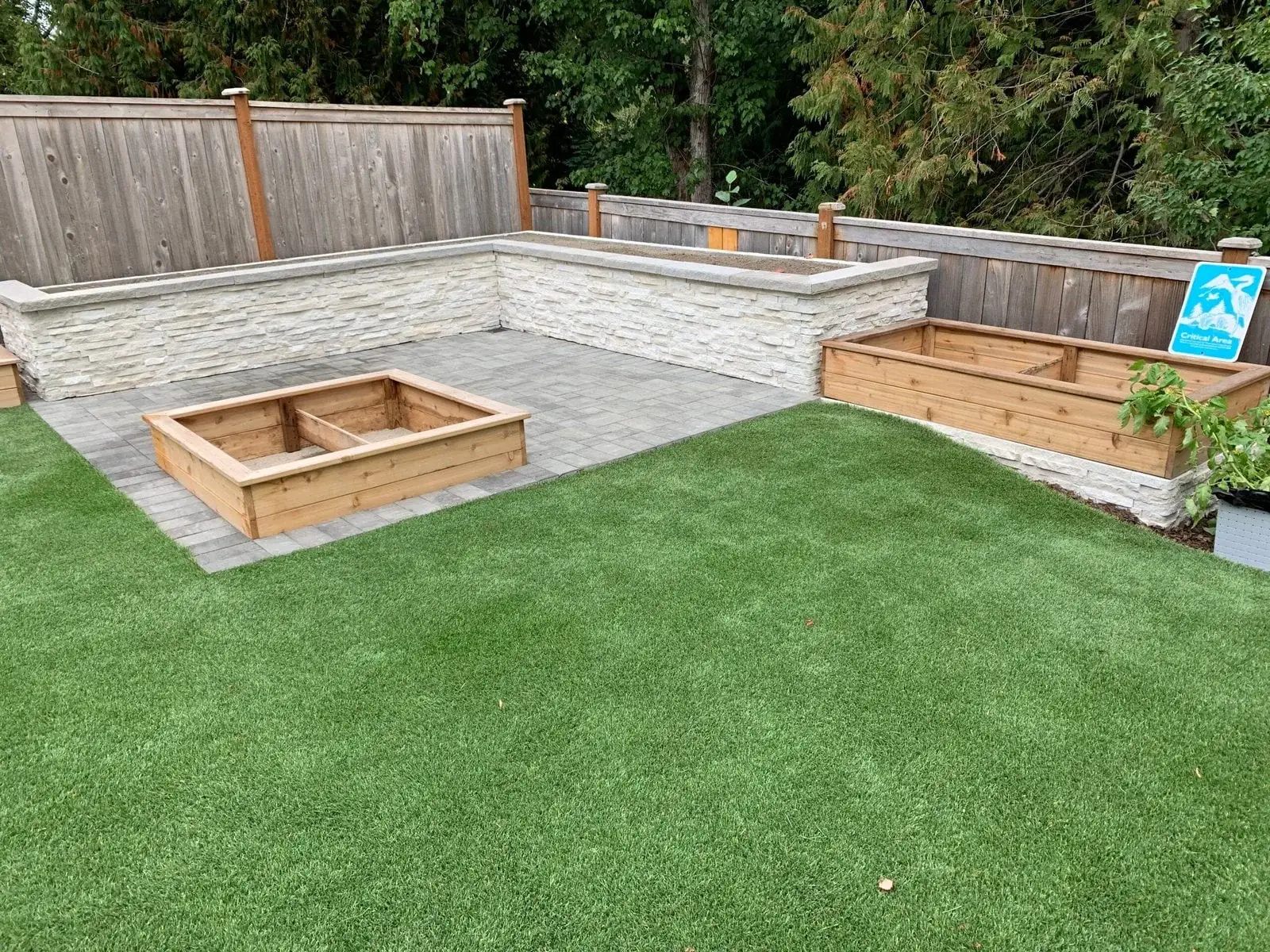
Artificial turf lawn framed by cedar raised planter beds and a paved seating area in West Seattle
What we get called about
West Seattle is a plateau with cliffs around it, and which of those two you are on decides the whole job. Plateau lots in the Junction and Westwood are straightforward, level and fast to build on. Bluff lots toward Alki, Fauntleroy and Delridge sit on ground with real landslide history, and a lot of them fall inside Environmentally Critical Area designations where the usual four-foot wall exemption does not apply. The view lots are the ones that need engineering, not just building.
Worth knowing in West Seattle
On a bluff lot, work out where the patio's runoff goes before you choose the pavers. Several hundred square feet of new impermeable surface concentrates water that used to soak in across the whole area, and directing that toward a slope edge is how a patio becomes a stability problem.
The method
The sequence does not change between neighbourhoods — what changes is the ground it is applied to. Full detail on the paver patios service page.
Before anything is dug we work out where the water is going to go. A patio should shed water away from the house at a fall you cannot feel underfoot but the rain can find.
Deeper than most people expect — the finished surface is the top of a build-up, not a layer laid on the lawn.
Crushed rock in compacted lifts. This is where the job is won or lost and it is the layer a cheap quote thins down.
A consistent bedding course over the compacted base, screeded rather than eyeballed.
Units laid to the pattern, cut cleanly at the edges, and locked in with edge restraint so the field cannot creep outward over time.
Jointing sand vibrated in so the surface acts as one interlocked field rather than a collection of loose units.
What it costs in West Seattle
Plateau patios price like ordinary Seattle work, $20 to $50 per square foot, with access as the main labour variable. Bluff work carries additional considerations — parcels inside an Environmentally Critical Area involve a different process and the runoff design carries more weight — so it is priced separately rather than being averaged into a plateau rate.
You pay after the project is fully completed.
The estimate you sign is the price you pay.
Spread the cost with no interest.
Covers hardscape work; vegetation excluded.
Local questions
General questions about this service are on the service page. These are the ones that only come up here.
Yes, and it is worth taking seriously. A patio is an impermeable surface, which means rainfall that previously soaked into that area now runs off it as concentrated flow. On level ground that is a drainage detail. On slide-sensitive bluff ground it is a stability question, because saturated soil is the mechanism that moves a slope. A large share of the bluff carries steep slope or landslide-prone designations, so we check the parcel against the city map before quoting and design where the runoff goes as part of the project rather than as an afterthought.
It affects the metalwork rather than the paving. Concrete pavers, poured concrete and natural stone are essentially unaffected by salt-laden wind. What corrodes noticeably faster in an exposed Alki or Fauntleroy position is untreated or low-grade metal, and a patio has more of it than people realise — railing posts and their fixings, the ties and pins in a segmental seat wall, drainage grates, light housings, and the edge restraint spikes holding the field in. The adjustment is specification rather than design: better-grade fittings on anything structural, and stainless or hot-dip galvanised where a cheaper fixing would be buried and unreachable. The pavers will outlast the hardware unless the hardware is specified for the position.
Terrace, in almost every case where the fall exceeds about a foot across the intended area. Building one large level surface on a slope means either a tall retaining wall at the low edge or a surface that is subtly wrong underfoot, and both are worse than the alternative. Two or three smaller connected platforms stepping down give you more usable space in total, need shorter and cheaper walls, and read better from the house. On a West Seattle view lot they also keep the outlook, which a single tall wall close to the building does not.
Because the exposure here is genuinely harder than the rainfall figure suggests. Almost all of Seattle's 38 inches falls between October and March, and July and August are dry — and a west-facing plateau or bluff garden gets the strongest afternoon sun and the most wind of anywhere in the city. Planting around a patio in that position loses moisture far faster than the equivalent bed in a sheltered east-facing garden. It is the main reason we specify zoned irrigation more often on this side of the water, and why exposure-tolerant planting outperforms the obvious choices.
Serving West Seattle and surrounding neighbourhoods
Alki · Admiral District · The Junction · North Admiral · Fauntleroy · Gatewood · Morgan Junction · Delridge · Highland Park · Arbor Heights · Roxhill · Westwood
98106 · 98116 · 98126 · 98136 · 98146
Recent work
HardscapingView full sizeA raised planter running the length of the terrace, capped in charcoal to pick up the darker banding in the paving.
 Artificial TurfView full size
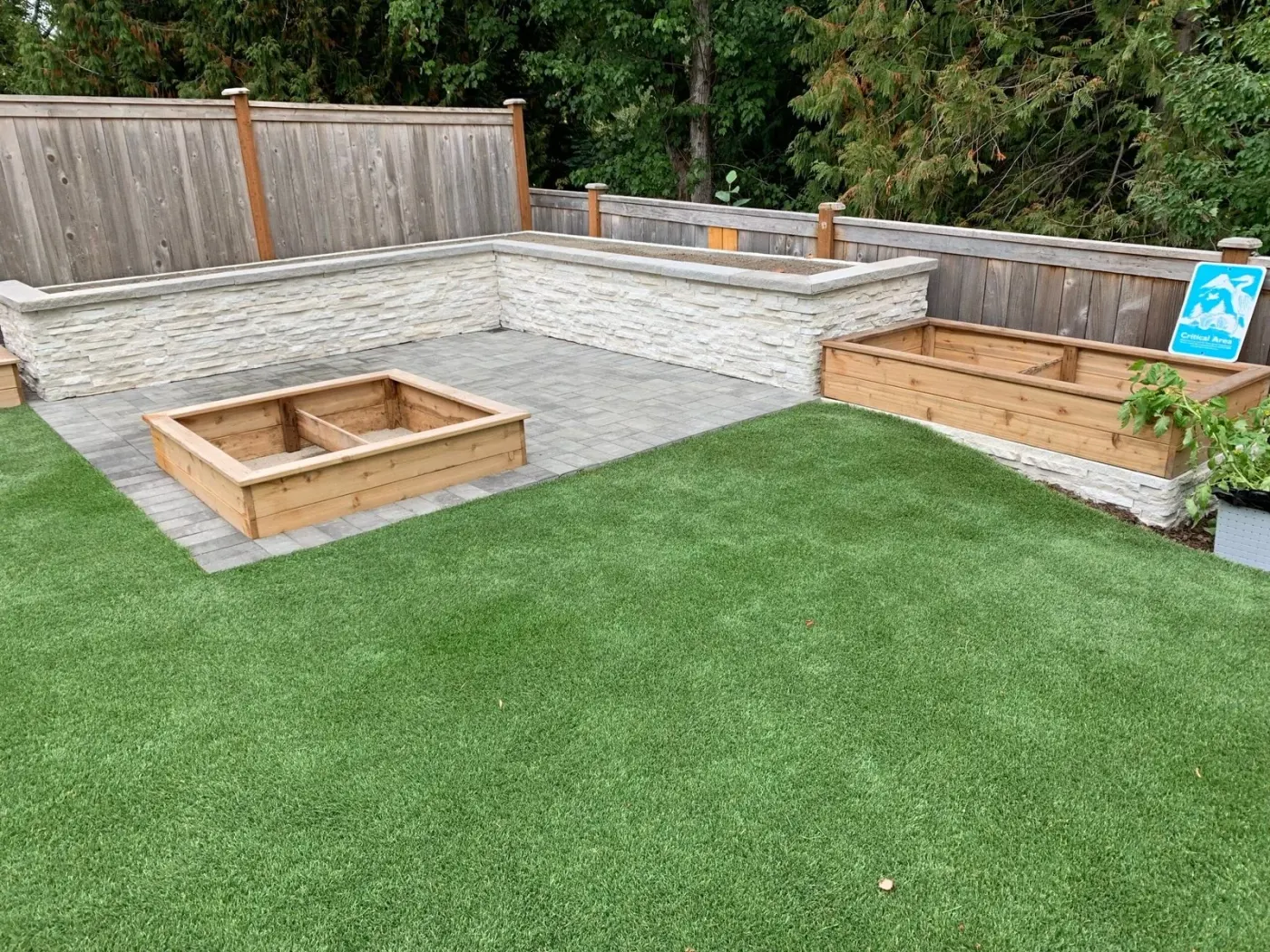
A no-mow lawn for a small city yard, with cedar planters and a paved seating edge.
 DeckingView full size
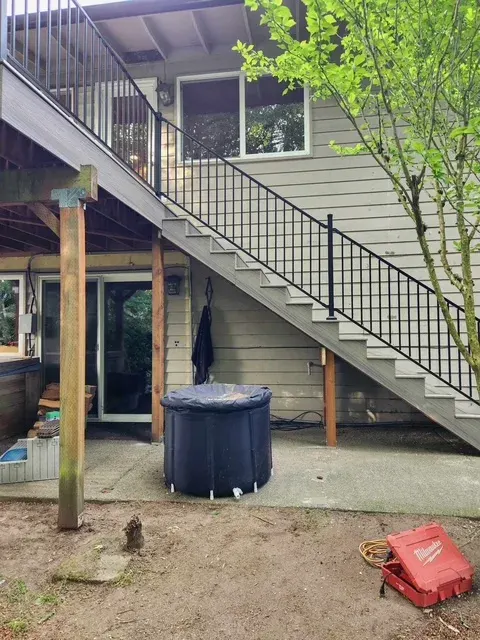
A West Seattle split-level where the only way to the bottom of the garden was through the house. A full-height run of stairs off the deck fixed that.
 Retaining WallsView full size
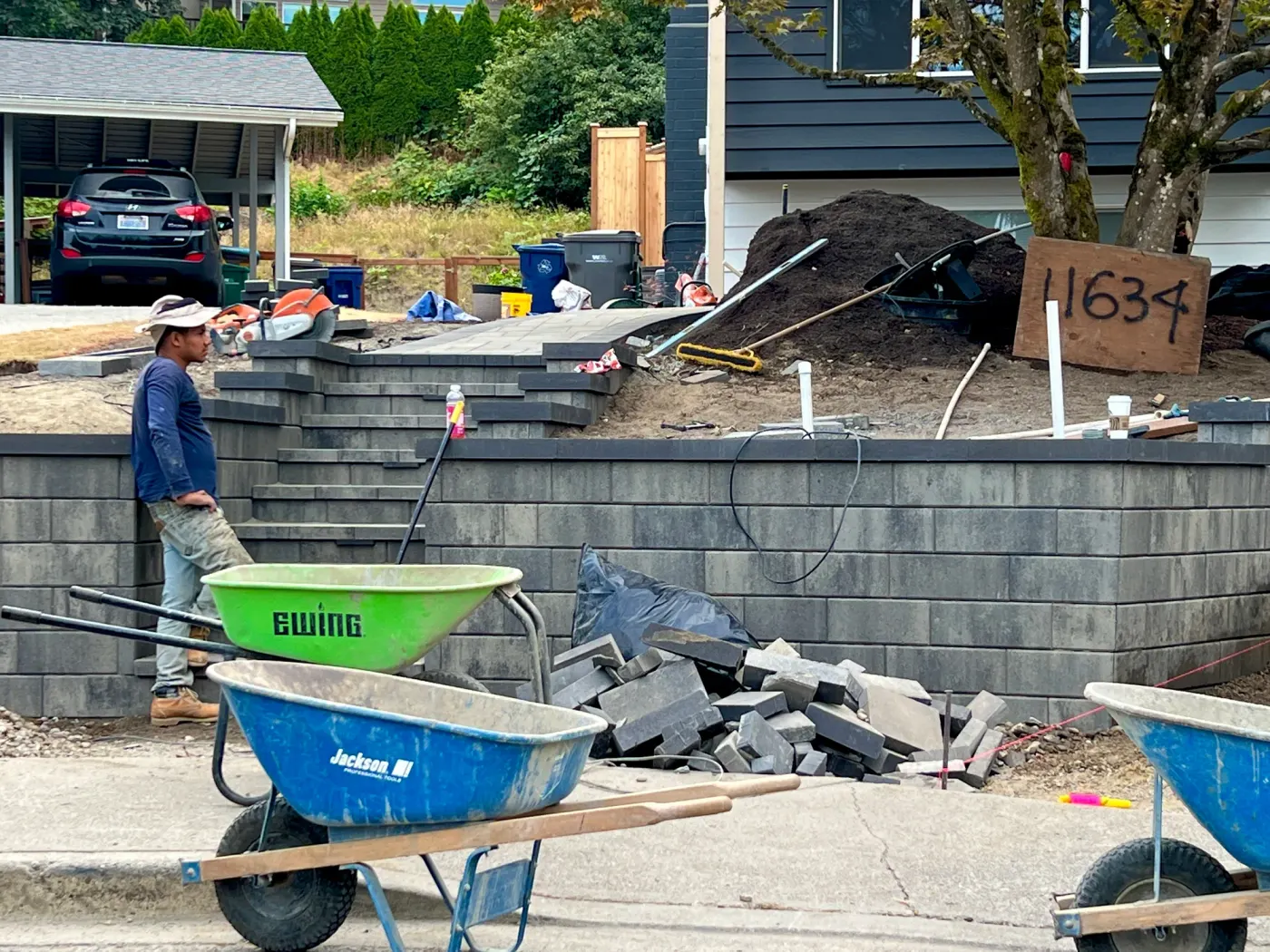
Mid-build on a West Seattle slope: block stacked, barrows running, the old surface still down. One crew on one site until it is finished, which is the only way the levels stay honest.
We come out, look at the ground, and put a fixed written price together. No deposit, and it does not change once agreed.
Free estimate
Three minutes on the form. We reply during office hours, Monday – Friday, 9:00 AM – 7:00 PM, and we come out and look at the site before quoting anything.
Or call (425) 533-9734
Thank you — we have your details. We reply during office hours, Monday – Friday, 9:00 AM – 7:00 PM. If it is urgent, call (425) 533-9734.