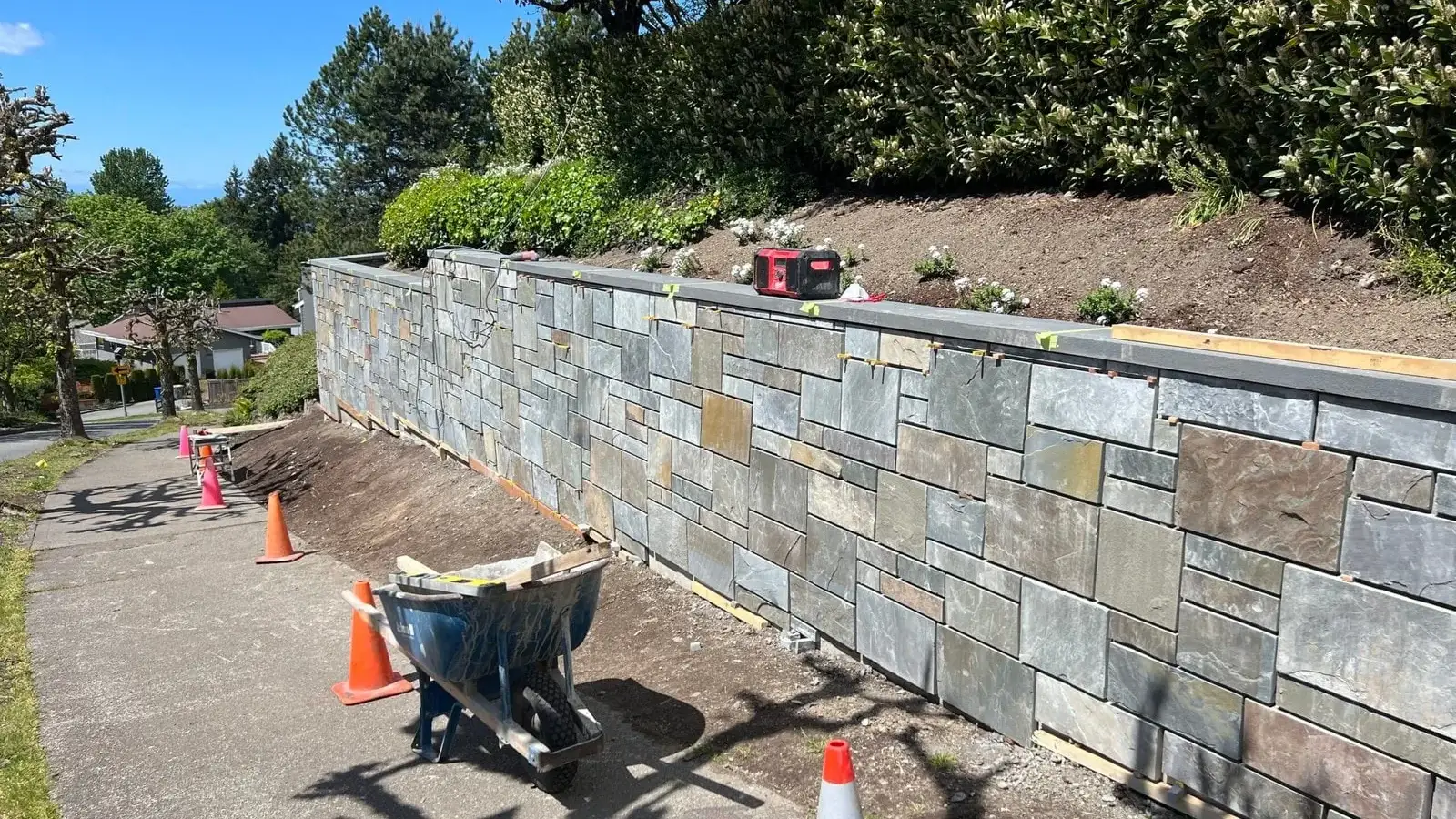
We are writing this knowing it will occasionally lose us work, because some of what follows will make a competitor’s quote look better than ours and some of it will make ours look better than a cheaper one. Both are fine. A homeowner who understands what they are comparing makes a better decision either way.
The problem with comparing landscaping quotes
Almost everything that determines whether a landscaping project lasts is invisible in the finished result and absent from a one-page quote.
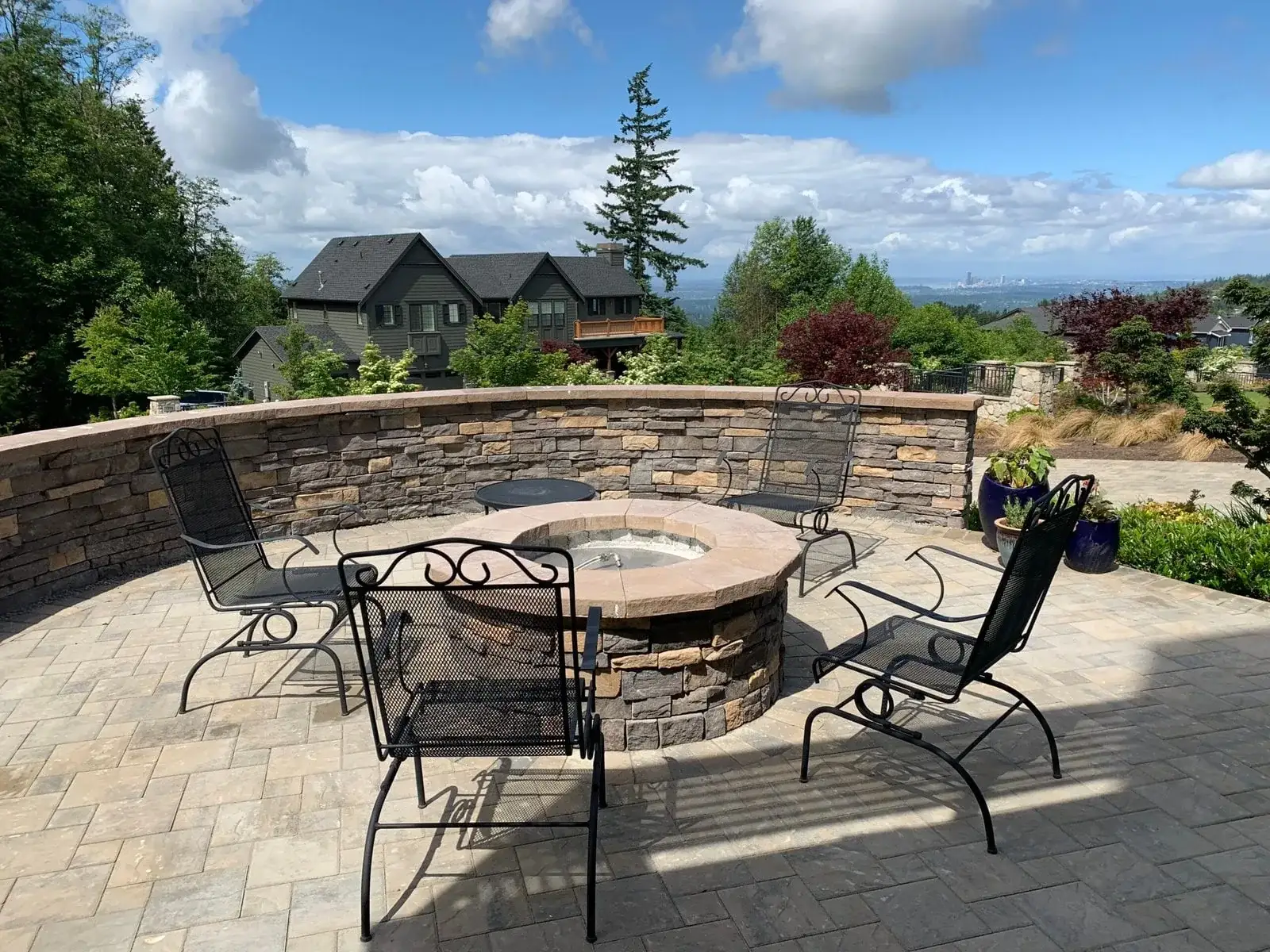
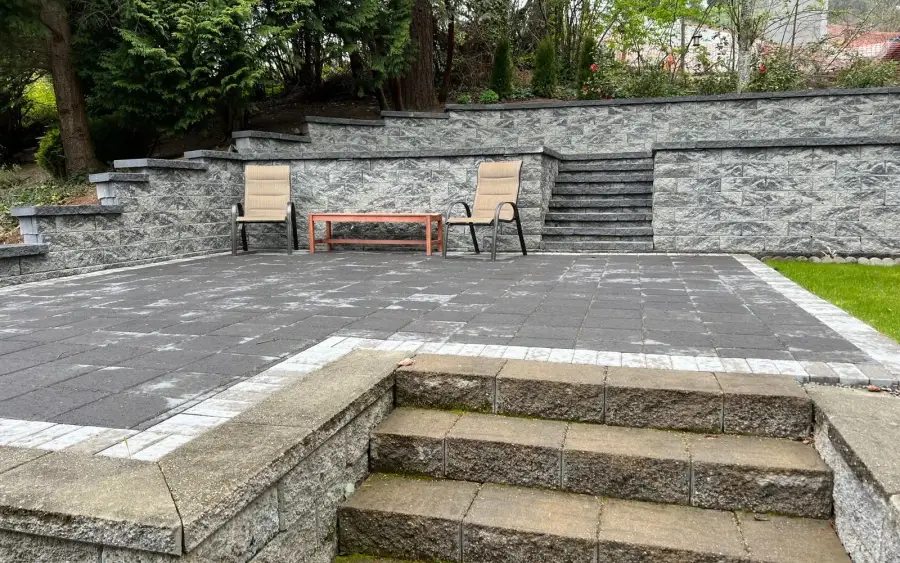
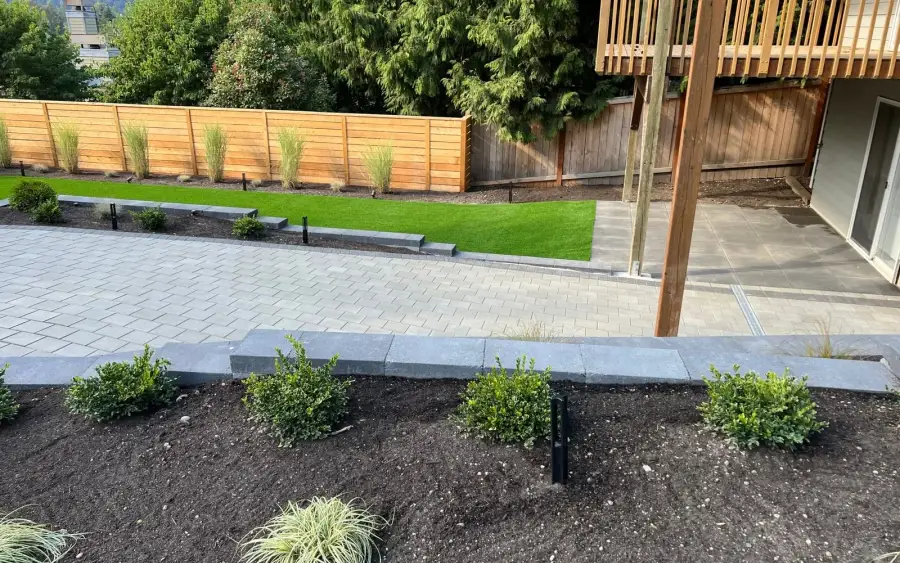
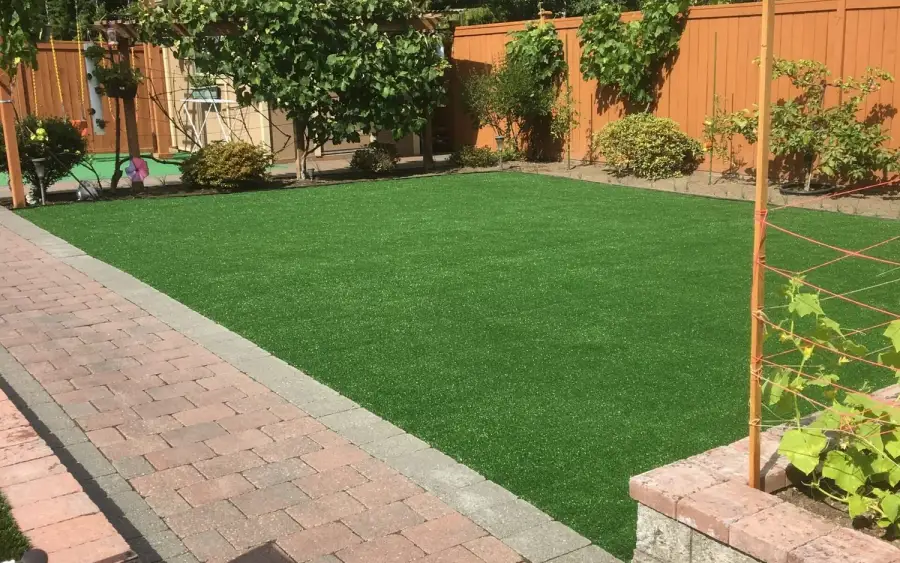
Two contractors can both write “install 400 sq ft paver patio” and be describing genuinely different products — one with a six-inch base compacted in three lifts and edge restraint, one with four inches of loosely tipped gravel. Both patios look identical in the handover photograph. One of them is still flat in ten years.
That is why price alone is a bad signal here, and why the useful thing is not to collect more quotes but to ask better questions of the ones you have.
Three questions that expose the difference
1. How deep are you excavating, and how is the base going in?
On Seattle’s glacial till the base has to spread the load and provide the drainage the subgrade cannot. For a pedestrian patio that is typically six to eight inches of compacted crushed rock below the finished surface, placed and compacted in layers.
Ask specifically about lifts. A compactor only transmits meaningful force a limited distance into loose material, so twelve inches tipped in one go and rolled produces a firm crust over uncompacted fill. It looks the same on handover day and settles over two years.
If one quote says “four inches” and another says “six to eight, compacted in three lifts”, you have your answer about why they differ by thousands.
2. Where does the water go?
This is the question that separates work that lasts from work that does not, on every service.
For a patio: what is the fall, and which direction does it shed to? For a retaining wall: what is behind it — perforated pipe at the footing, clean free-draining rock, geotextile — and where does that drainage discharge to? For a drain: what is the discharge point, and is it daylight or an approved connection?
If nobody has mentioned water, nobody has thought about it. On a wall in particular, the drainage behind it is the wall — and it is the first thing removed from a quote that needs to come in low, precisely because you cannot see it afterwards.
3. Have you walked the access route?
A patio that takes two days on a Bellevue lot with a driveway can take four on a Capitol Hill lot where every barrow of base material goes through a three-foot gate.
A contractor who has not looked at how material reaches the back garden has not priced your job. They have priced a job. The difference tends to surface as a change order in week two.
On deposits
The convention in this trade is a deposit up front, and it is worth understanding what you are actually paying for. Sometimes it is genuine material procurement. Frequently it is cash flow, and occasionally it is the mechanism by which a bad job becomes an unrecoverable loss.
We do not take one. You pay when the project is complete. That is not generosity — it works for us because we plan properly, price accurately and finish what we start, and it moves the risk to the party who is actually in a position to manage it.
You do not have to hire us to benefit from knowing this is possible. Ask any contractor whether the deposit is negotiable, and pay attention to the answer.
On fixed prices
The estimate you sign should be the price you pay. Most mid-project increases trace back to something that was visible on the first visit and nobody looked at — the access route, the real excavation depth, where water goes, whether the parcel is in an Environmentally Critical Area.
Those are all things a contractor can establish before quoting. When a price moves mid-build, the usual honest explanation is not that conditions changed but that the assessment was rushed.
The one thing worth paying more for
If two quotes are close and you cannot tell them apart, choose the one whose contractor told you something you did not want to hear.
The most useful signal in this trade is a contractor who says the cheaper answer is the right one — a regrade instead of a full drainage system, a downspout tie-in instead of a French drain, overseeding instead of turf, keeping a wall instead of rebuilding it. Someone who has never once talked you out of anything is not evaluating your project.