
 Artificial TurfView full size
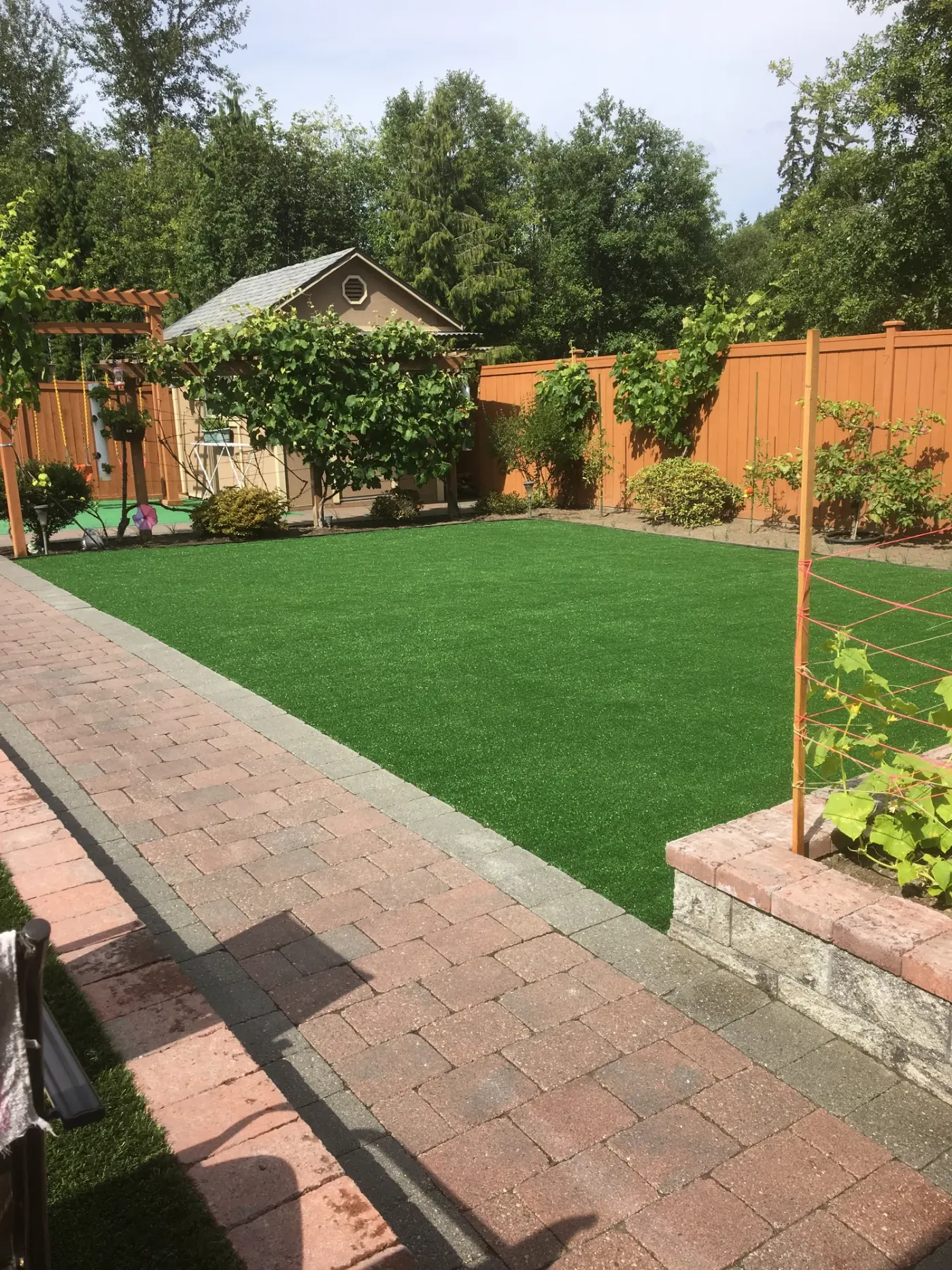
Turf lawn inside a brick border
Artificial turf pinned into a brick paver border so the edge cannot lift or curl. The grape trellis and the raised planter were part of the same job.
No down payment. You pay when the project is finished.
Monday – Friday, 9:00 AM – 7:00 PM · Capitol Hill, Seattle
Artificial Turf · Ballard
Turf makes more sense on a Ballard lot than almost anywhere in the city, and the reasons are practical rather than aesthetic. The back garden is frequently under eight hundred square feet, shaded by the house on one side and a neighbour on the other, and a lawn that small is high-maintenance, wears through where people walk and needs a mower stored on a property with no shed and no garage. Add a dog and it is mud by December. The Ballard variable worth testing is the ground: much of this neighbourhood sits on sandier outwash rather than the till under the rest of Seattle, which occasionally means a shallower base than the citywide standard.
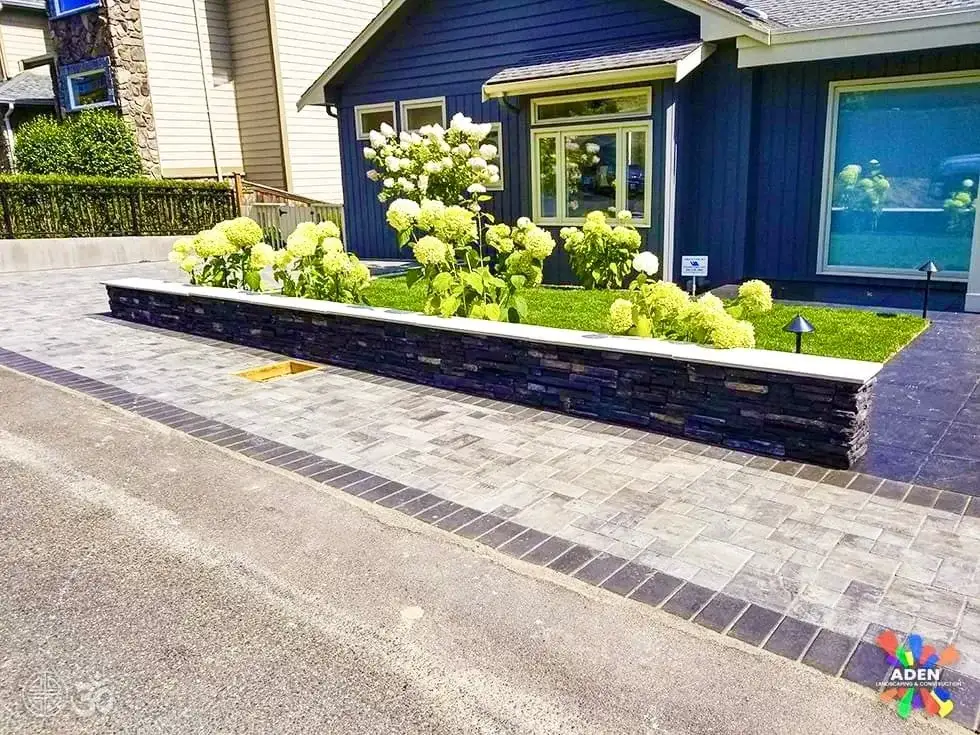
Paver apron and planted strip across the front of a house on an older residential street
What we get called about
Ballard is small lots and good drainage, which is close to the opposite of the rest of Seattle. The typical job here is not holding a slope or fixing a bog — it is making a compact rectangle behind a hundred-year-old house genuinely usable. That means more paved surface than people expect, a turf or lawn area smaller than instinct suggests, and enough planting depth at the boundary to make the space feel enclosed rather than merely small. The one real constraint is access: the older streets have narrow side returns and no off-street parking, so material handling shapes the schedule.
Worth knowing in Ballard
Test the ground before you accept a base specification. A hole eighteen inches deep filled with water will clear within hours on Ballard outwash and hold for a day or more on till — and that single result changes both the depth you need and the price you should be paying.
The method
The sequence does not change between neighbourhoods — what changes is the ground it is applied to. Full detail on the artificial turf service page.
Light, drainage, use and how much of the garden it should cover. A shaded 200-square-foot back garden and a sunny 1,200-square-foot play lawn are different recommendations.
Existing lawn and topsoil out, down to a depth that leaves room for a real base rather than a skim.
Crushed rock in compacted lifts, graded to a fall. On lots where water arrives from uphill this stage sometimes gains a drain before the turf goes anywhere near it.
Turf rolled out to relax, cut to the shapes, seamed, and fixed at every edge so nothing can lift.
Infill spread and brushed in to hold the pile up. This is what stops turf looking flattened after a year — it is not optional.
What it costs in Ballard
Ballard turf areas are small, so the material bill is modest and the cost sits disproportionately in handling — base rock comes off the kerb by hand on streets with no off-street parking and has to be cleared the same day. The offset is that on genuine outwash ground the base build-up is sometimes shallower than the citywide standard, which reduces both excavation and imported material. We test rather than assume.
You pay after the project is fully completed.
The estimate you sign is the price you pay.
Spread the cost with no interest.
Covers hardscape work; vegetation excluded.
Local questions
General questions about this service are on the service page. These are the ones that only come up here.
Sometimes, and it is genuinely worth testing rather than assuming either way. Much of Ballard and Crown Hill sits on glacial outwash rather than the dense till under most of Seattle, and where the ground drains freely the base is doing less drainage work — so it can occasionally be shallower than the citywide standard. But outwash is not universal here and pockets of till turn up mid-block. A simple percolation test settles it, and getting it wrong in the optimistic direction produces a turf lawn that traps water, which is the fault that cannot be brushed out.
Often more so than on a large one, because the per-square-foot maintenance burden of a small shaded lawn is disproportionate. Under about four hundred square feet a lawn is shaded most of the day, stays damp, wears through wherever people cross it, and still requires a mower that has to live somewhere on a lot with no storage. The total install cost is modest at that size. What it buys is a green surface that works in February and needs no equipment, which on a Ballard lot is a genuine practical gain rather than a luxury.
Well, and it is one of the strongest cases for it. A dog on a small lawn concentrates all of its use into a few square metres, which no grass survives — the patch never recovers because the dog returns to it. Turf on a permeable backing over a properly drained base handles that indefinitely. For dog owners we specify an infill that does not retain ammonia the way older sand-only fills did and enough drainage depth for repeated use in one spot. A hose-down every few weeks in summer is the whole maintenance regime.
It can, though it is usually not the best answer for that particular strip. A side return is the worst microclimate on a city lot: permanently shaded, taking discharge from at least one downspout, and too narrow to dry out. Turf there will stay green but it will also stay damp and collect debris, and it is a route rather than a place to sit. A hard surface laid to a cross-fall with the downspout tied into a drain usually serves that strip better. Turf earns its place in the part of the garden you actually use.
Serving Ballard and surrounding neighbourhoods
Ballard Avenue · Sunset Hill · Loyal Heights · Whittier Heights · West Woodland · Adams · Crown Hill edge
98107 · 98117
Recent work
Artificial TurfView full sizeArtificial turf pinned into a brick paver border so the edge cannot lift or curl. The grape trellis and the raised planter were part of the same job.
 HardscapingView full size
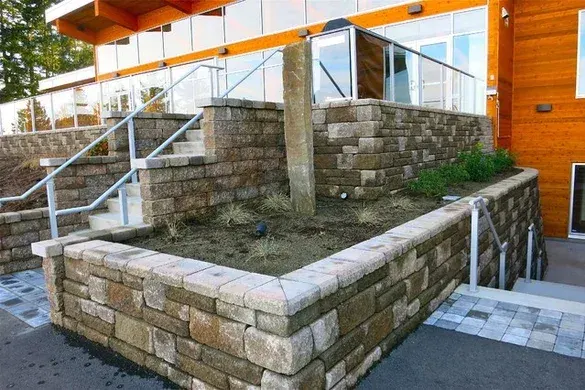
Segmental block walls terracing the grade at the front of a modern building, with a stone column, handrails to code and a paved approach — commercial hardscaping, where the walls have to take footfall as well as soil.
 Retaining WallsView full size
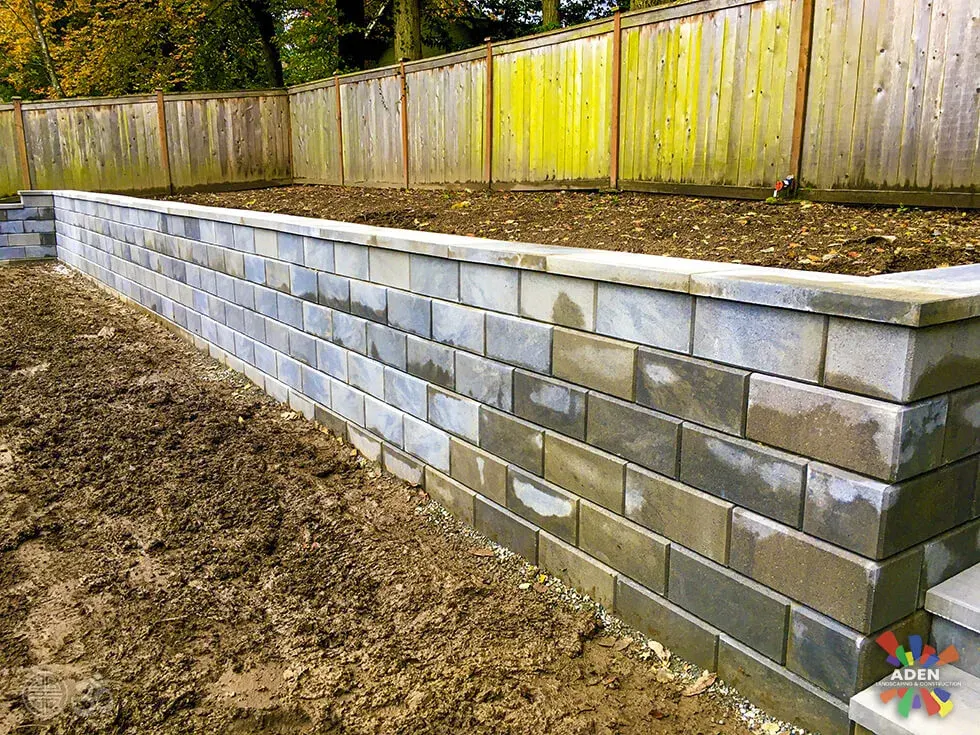
A wall run the whole length of a fence line to win back a flat strip of garden. Ballard lots are narrow, so the width this recovers is width the garden genuinely did not have.
 WalkwaysView full size
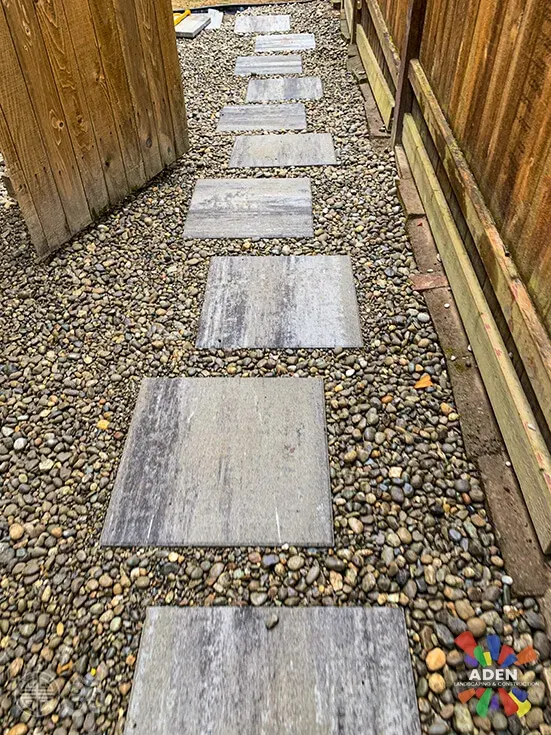
A side return too narrow for a full path. Large slabs floated in washed rock give a route through and let the ground either side carry on taking water.
We come out, look at the ground, and put a fixed written price together. No deposit, and it does not change once agreed.
Free estimate
Three minutes on the form. We reply during office hours, Monday – Friday, 9:00 AM – 7:00 PM, and we come out and look at the site before quoting anything.
Or call (425) 533-9734
Thank you — we have your details. We reply during office hours, Monday – Friday, 9:00 AM – 7:00 PM. If it is urgent, call (425) 533-9734.