Seattle’s landscaping calendar is compressed, and most people discover this in April when they call three contractors and all of them are booked until August.
Here is what actually works when.
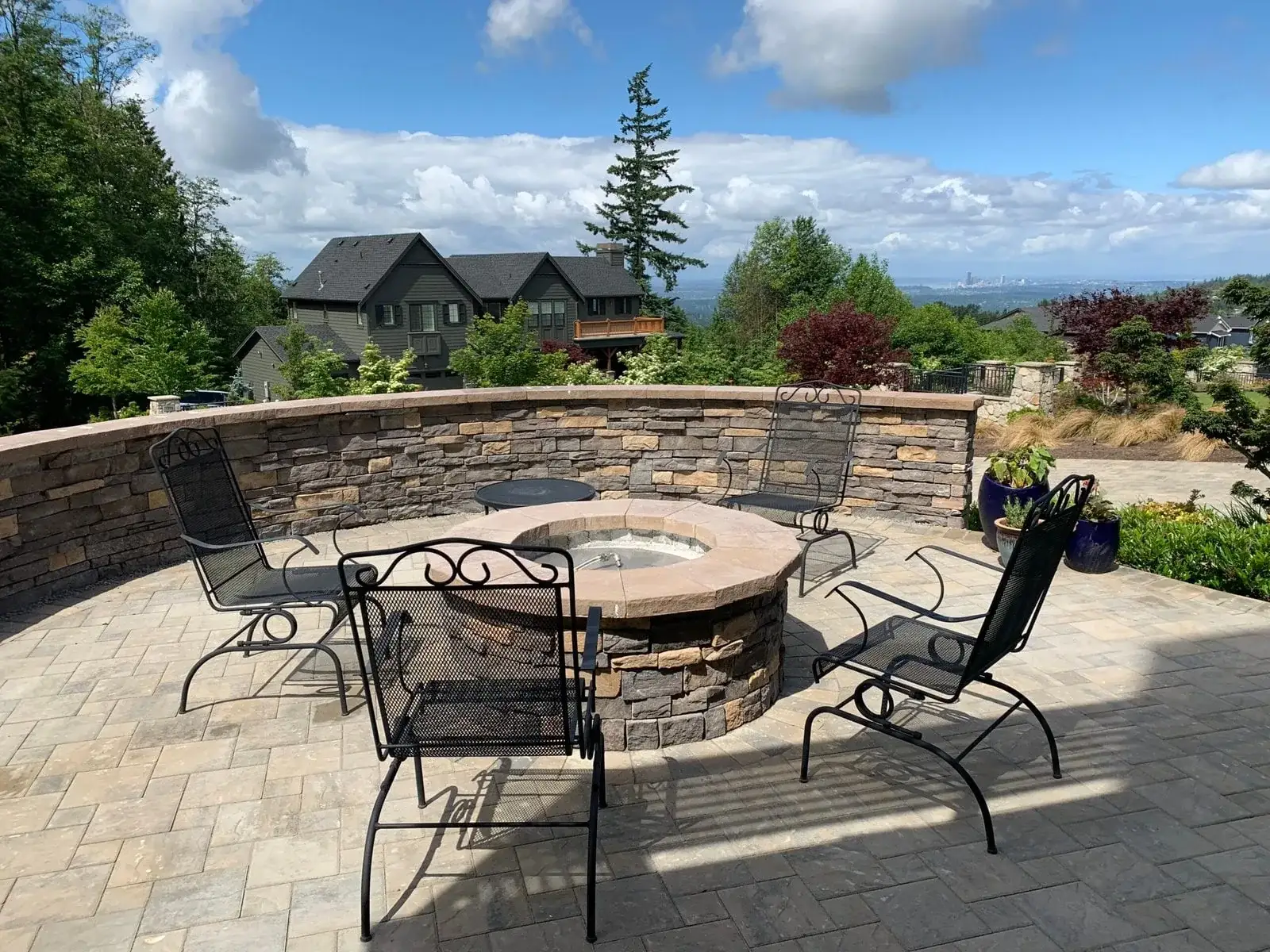
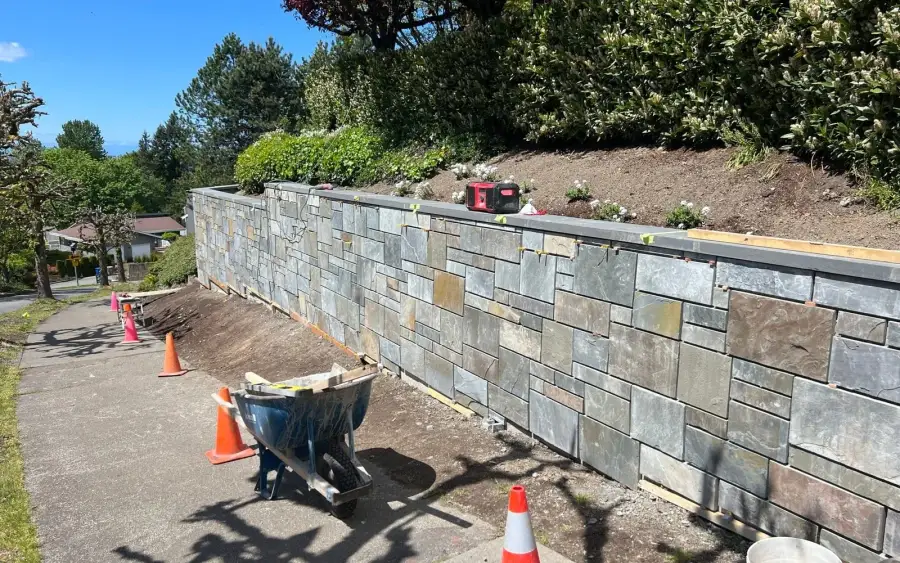
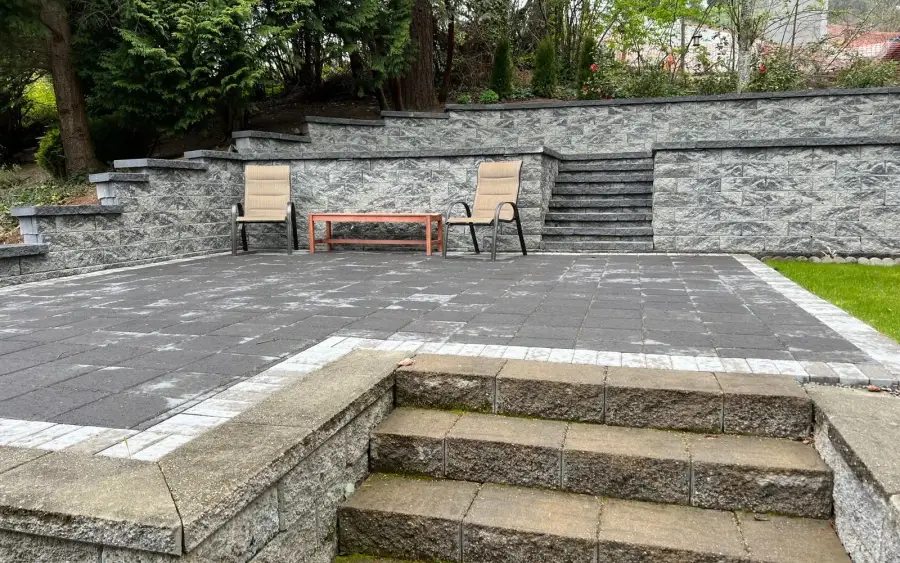
March to September: hardscape
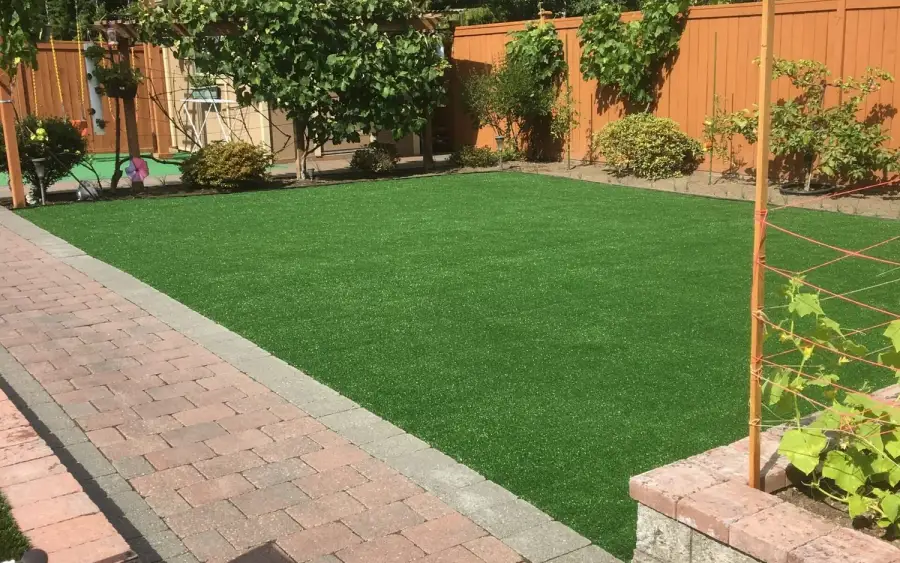
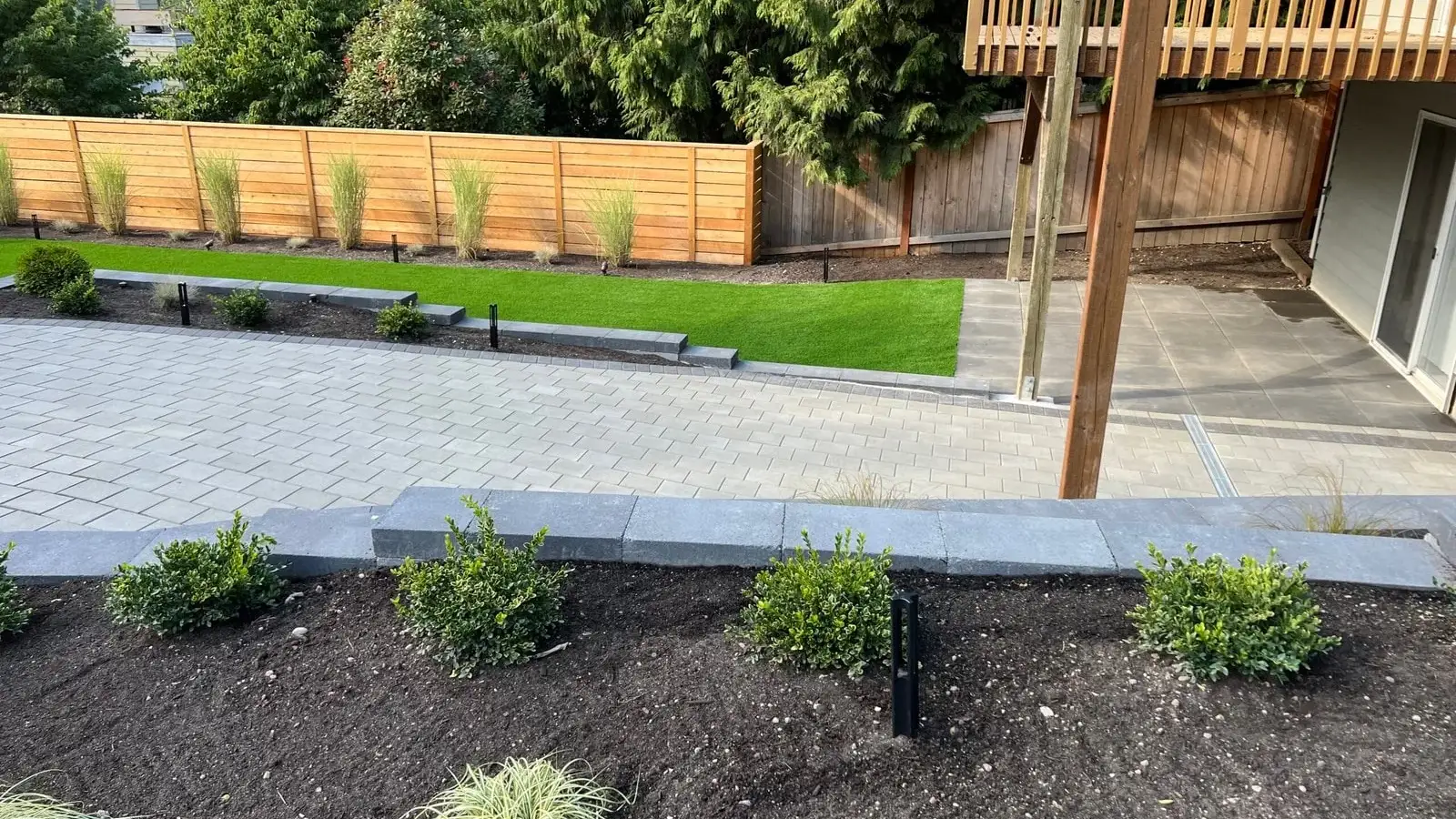
Walls, patios, driveways, paving, masonry. These need workable ground and dry-ish conditions for two specific reasons.
Compaction. Saturated base material will not compact to specification. You can go through the motions with a plate compactor on wet crushed rock and get a surface that looks finished and settles over the next two years.
Curing and jointing. Concrete does not want to cure in near-freezing conditions, mortar does not want to be rained on for its first two days, and jointing sand has to be dry enough to vibrate into the joints of a paver field.
We do build outside this window when it is necessary. It takes longer, costs more in lost days, and produces a less reliable result — so where the schedule allows, waiting is genuinely the better advice.
October to March: drainage, trees and clearing
This is the half of the year most people write off, and it is when several services are at their best.
Drainage is genuinely better assessed and installed in the wet months. Between October and March we can see exactly where water collects, which way it runs and how long it takes to clear. A dry August site visit cannot give you that information, and a drain designed from a homeowner’s description of what happens in winter is a drain designed from memory.
Tree work is easier on dormant deciduous trees — the structure is visible without leaves, and ground disturbance matters less when nothing is actively growing.
Clearing and reclaim work is far easier in winter. Blackberry and ivy have died back, you can actually see the ground, and the volume to haul is lower.
Fences, pergolas and structures carry on regardless. Post setting is the only weather-sensitive stage.
Planting: autumn beats spring
The instinct is to plant in spring. In this climate autumn is usually better.
A plant put in during September or October has the entire wet season to establish roots before it faces any water stress. The same plant put in during May has perhaps six weeks before it meets a Seattle August, which is genuinely dry — nearly all of our 38 inches of rain falls between October and March.
The exception is anything frost-tender or anything that needs to be watched closely in its first weeks.
The scheduling reality
January and February are when you should be booking design and estimating. The crews have capacity, we have time to walk the site properly, and there is room to resolve permits, ECA checks and HOA architectural review before the season starts.
By April the good crews in this city are committed for the season. A call in April is realistically a build in late summer at the earliest.
Design in winter, build in spring is the sequence that works. It also means a project needing a permit or a board submission has the runway to get one without holding up the build.
A practical order for a phased project
If the budget will not cover everything at once, the sequence matters more than the timing:
- Everything buried, first. Drainage, irrigation sleeves under any hard surface, conduit for lighting. These cost very little while the ground is open and a great deal once there is a finished patio over them.
- Structural work. Walls, grade, terracing.
- Surfaces. Patios, paths, driveway.
- Planting and lighting last.
It is the least satisfying way to spend the first phase of a budget, and it is the only sequence that does not involve paying twice for the same ground.