 Retaining Walls
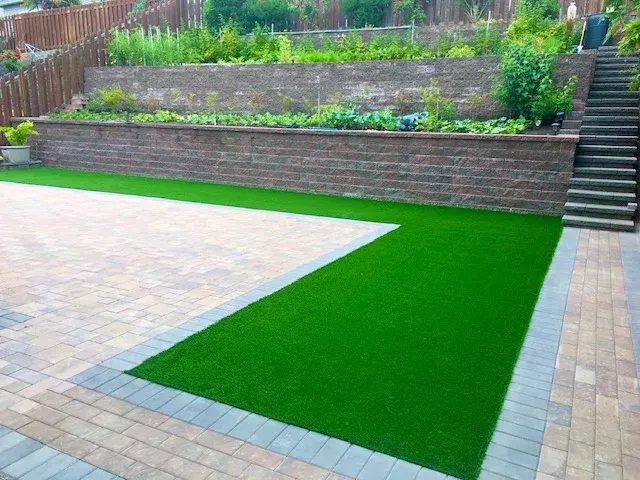
Terraced vegetable beds over a turf lawn
A brick-faced wall the full width of the garden, carrying raised vegetable beds above a level turf lawn and paver terrace.
No down payment. You pay when the project is finished.
Monday – Friday, 9:00 AM – 7:00 PM · Capitol Hill, Seattle
Retaining Walls · Madison Park
Madison Park is gentle ground by Seattle standards — a steady fall from Washington Park down toward the lake, with the genuinely steep land sitting just south in Denny-Blaine rather than here. That changes what a wall is for. Here it is rarely an emergency; it is usually a level change built deliberately to make a large mature garden work better, or a replacement for something built decades ago that has come to the end of its life. The two things that actually shape the job are the gardens themselves and Broadmoor. These are among the largest and most heavily planted private gardens inside the city, so there is almost always something mature worth designing around, and the detail standard is higher because the surroundings are good.
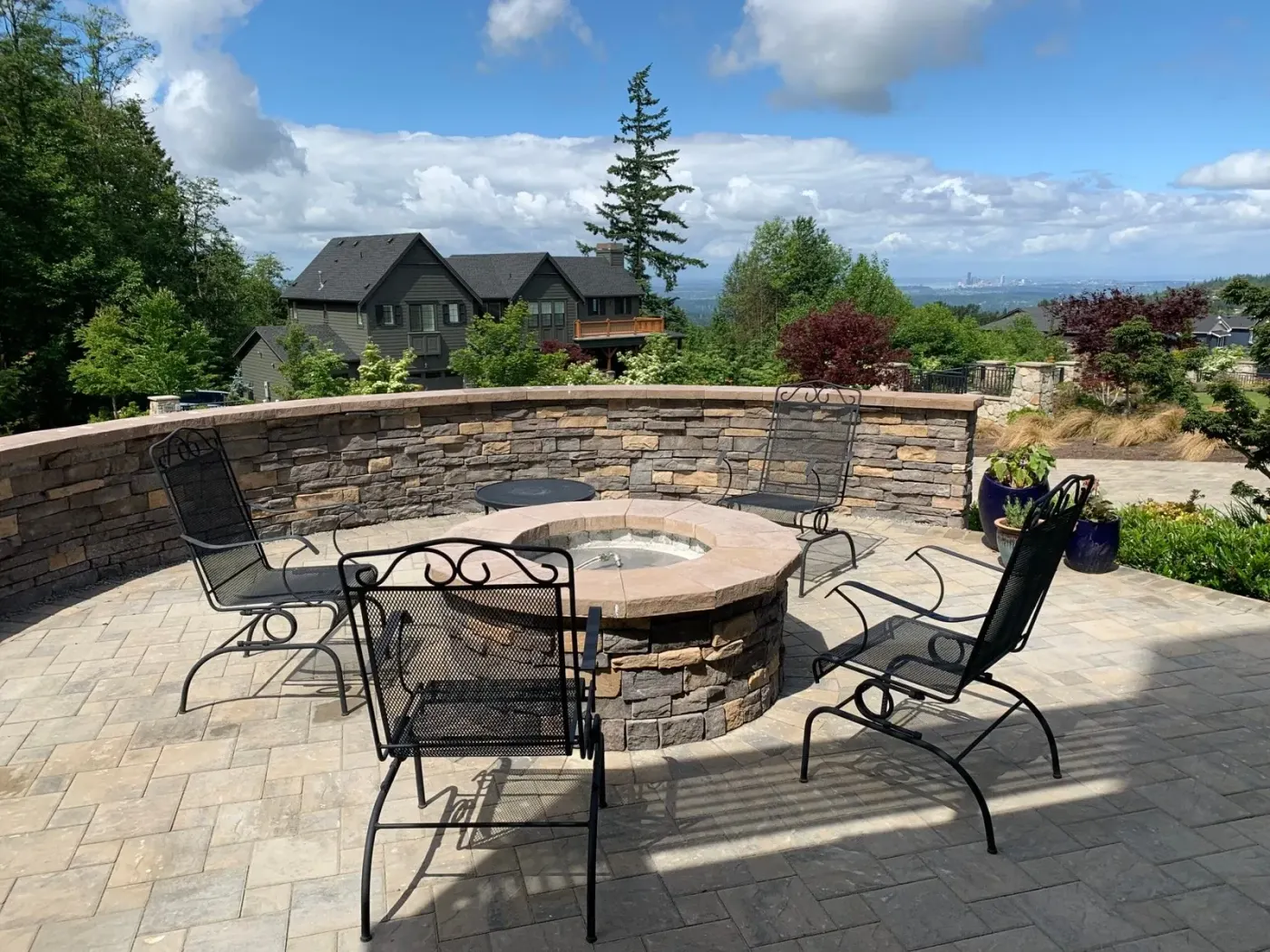
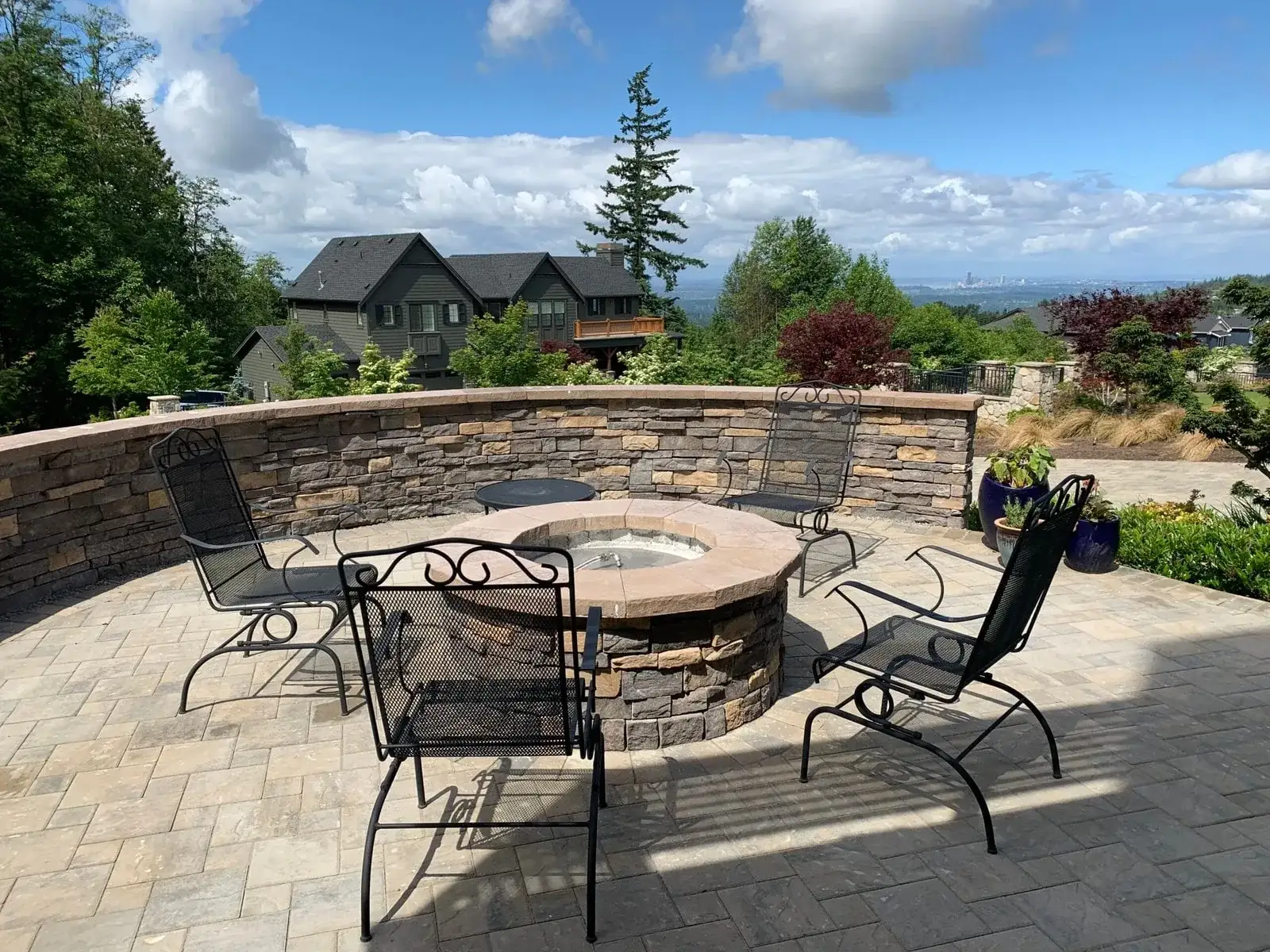
Circular stone fire pit and curved seat wall on a paver patio in a Madison Park garden
What we get called about
Madison Park is where full renovations happen rather than repairs. The gardens are larger, older and more heavily planted than the Seattle average, which changes the work in two ways: there is usually something mature worth designing around rather than clearing, and the detail standard is higher — masonry joints, lighting and planting transitions get looked at closely here. The other Madison Park specific is Broadmoor, where the architectural review process is real, is enforced, and belongs at the start of a project rather than as an afterthought.
Worth knowing in Madison Park
If anything mature is near the proposed wall line, get an arborist opinion before the design is fixed rather than after. Moving a wall two feet at the drawing stage costs nothing; discovering during excavation that the footing runs through the structural roots of a tree you wanted to keep costs you either the tree or the wall.
The method
The sequence does not change between neighbourhoods — what changes is the ground it is applied to. Full detail on the retaining walls service page.
We look up whether the property sits in an Environmentally Critical Area and what the grade actually is, because that decides the permit position before it decides anything else.
A level, compacted base trench below finished grade. This is the step that gets rushed on a cheap job and it is the step that determines whether the wall stays straight.
Levelled unit by unit. Every course above copies the first one, so an error here multiplies all the way up.
Perforated pipe at the footing, clean rock backfill placed course by course rather than dumped at the end, and geotextile separating rock from soil so it does not silt up.
Compacted in layers, not filled in one go. Settled backfill is what pulls a wall out of line a year later.
Capping units, any planting above, and the ground reinstated so the wall reads as part of the garden rather than an intervention.
What it costs in Madison Park
Walls here sit in the $5 to $45 per square foot of face range, and Madison Park jobs land in the upper part of it more often than the lower — not because the ground is harder but because the finish standard is. Matching existing stonework, working carefully around mature planting, and hand-excavating near significant roots all take time that a clear site does not. Where a property is inside Broadmoor we price the approval process as its own line rather than hiding it.
You pay after the project is fully completed.
The estimate you sign is the price you pay.
Spread the cost with no interest.
Covers hardscape work; vegetation excluded.
Local questions
General questions about this service are on the service page. These are the ones that only come up here.
If your property is inside Broadmoor, then generally yes — the architectural review covers exterior changes, and hardscape, walls and significant planting alterations typically need approval before work starts rather than after. Outside Broadmoor there is no association and the only constraints are the city's. We handle the submission as part of the job, and the practical advice is to build the review into your timeline from the beginning: it is not onerous, but it is sequential, and discovering it after you have booked a crew means rescheduling. We will tell you at the estimate which side of that line you are on.
Usually a good deal of it, and this is most of the skill on Madison Park jobs. What makes it possible is deciding the wall line around what is staying rather than drawing the wall first and seeing what survives — which means walking the garden with you and being specific about which plants are genuinely worth protecting and which are replaceable. Where a footing has to pass near a significant tree we hand-excavate rather than machine it, and an arborist advises on root pruning. Occasionally the honest answer is that a particular plant and a particular wall cannot both exist, and we would rather say that at the drawing stage.
Stone selection first, then jointing, then weathering — and the third one is the part that is usually underestimated. Finding stone that resembles what is there is often achievable; getting new work to sit comfortably beside sixty years of patina is harder, because clean new mortar reads as new however well the stone matches. What generally works better than an invisible join is a deliberate one: a clear transition, or taking the new work to a logical break point like a corner or a step, so the eye reads two periods rather than one failed match. We will show you both approaches before committing.
It is a drainage design question rather than an obstacle. The low ground through the valley is heavier and wetter than the higher land toward Washington Park, which means more water passing through the retained soil and a greater need for the drain behind the wall to actually discharge somewhere rather than into a soakaway that is already saturated for half the year. On those lots we trace where the water goes before designing the wall, and the drainage is frequently the larger part of the engineering. A wall on wet ground with a nominal drain is a wall with a service life.
Serving Madison Park and surrounding neighbourhoods
Madison Park · Madison Valley · Broadmoor · Washington Park · Denny-Blaine · Montlake edge
98112
Recent work
We come out, look at the ground, and put a fixed written price together. No deposit, and it does not change once agreed.
Free estimate
Three minutes on the form. We reply during office hours, Monday – Friday, 9:00 AM – 7:00 PM, and we come out and look at the site before quoting anything.
Or call (425) 331-9811
Thank you — we have your details. We reply during office hours, Monday – Friday, 9:00 AM – 7:00 PM. If it is urgent, call (425) 331-9811.