
 Walkways
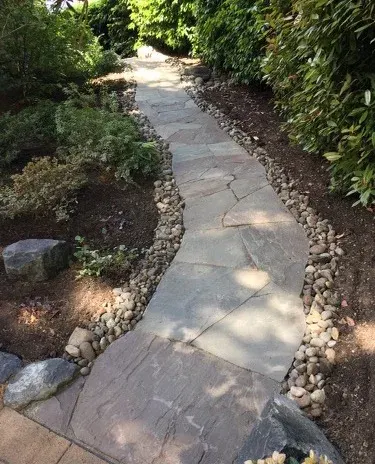
Flagstone path with a river-rock edge
A shaded side route in flagstone, edged both sides in river rock so the winter runoff has somewhere to go instead of across the path.
No down payment. You pay when the project is finished.
Monday – Friday, 9:00 AM – 7:00 PM · Capitol Hill, Seattle

Retaining Walls · Green Lake
Green Lake splits in two for a wall project and the dividing line is roughly how far you are from the water. Around the lake basin the ground is flat and the water table sits high, which makes a wall less about holding a slope and more about what happens to the drain behind it when the ground is already wet. Up on the Phinney Ridge side to the west, or toward Maple Leaf to the north-east, there is genuine grade and walls do structural work. What both halves share is lot size: these are older platted streets with compact gardens where the house takes a high proportion of the lot, so every wall is also a decision about how much of a small space it consumes.
Pop-up sprinkler head watering a lawn beside a landscape bed lit at night in a Green Lake garden
What we get called about
Green Lake is a dense neighbourhood of small lots where the premium is proximity to the park rather than the size of your own garden. That makes the work here about intensity: a compact space has to be worth looking at from indoors, be usable for a table and chairs, and hold up to being walked across every day. Two local conditions matter. The ground close to the lake sits low with a high water table, so drainage there behaves differently from the streets up the hill. And the tight lots mean access and material handling are a real line in every estimate.
Worth knowing in Green Lake
On a compact Green Lake garden, ask what the wall section costs you in floor area before you choose the material. A chunky block system with a wide base can consume a foot and a half of depth for its whole length — on a garden this size that is a measurable fraction of the usable space, and a slimmer engineered solution is sometimes worth its higher per-foot price.
The method
The sequence does not change between neighbourhoods — what changes is the ground it is applied to. Full detail on the retaining walls service page.
We look up whether the property sits in an Environmentally Critical Area and what the grade actually is, because that decides the permit position before it decides anything else.
A level, compacted base trench below finished grade. This is the step that gets rushed on a cheap job and it is the step that determines whether the wall stays straight.
Levelled unit by unit. Every course above copies the first one, so an error here multiplies all the way up.
Perforated pipe at the footing, clean rock backfill placed course by course rather than dumped at the end, and geotextile separating rock from soil so it does not silt up.
Compacted in layers, not filled in one go. Settled backfill is what pulls a wall out of line a year later.
Capping units, any planting above, and the ground reinstated so the wall reads as part of the garden rather than an intervention.
What it costs in Green Lake
The $5 to $45 per square foot range applies, and Green Lake jobs are pushed upward by access rather than by engineering. Compact lots on narrow streets frequently mean no machine route, so excavation and material movement are by hand — which on a small wall can double the labour even though the wall itself is modest. Near the basin, where a drain cannot simply discharge downhill, a pumped or alternative drainage solution is a real line item and we quote it as one.
You pay after the project is fully completed.
The estimate you sign is the price you pay.
Spread the cost with no interest.
Covers hardscape work; vegetation excluded.
Local questions
General questions about this service are on the service page. These are the ones that only come up here.
That is the central question on the low ground here, and it needs answering before the wall is designed rather than after. A conventional wall drain works by gravity to a point lower than the pipe, and near the basin that point sometimes does not exist on your property. The options are a connection to an existing stormwater route where one is available and permitted, a pumped system with the maintenance that implies, or a design that reduces how much water reaches the back of the wall in the first place. What does not work is a pipe into a gravel pit in ground that is saturated for half the year, which is the default detail and the reason some Green Lake walls fail young.
Yes, and it is routine on these streets — but it changes the cost structure enough that you should see it priced separately. With no machine route, excavated spoil comes out by barrow through the house side or the front, and block and aggregate go in the same way. We lay temporary protection over whatever we cross and plan the route before mobilising. On a small wall the access method can be a larger cost than the materials, which is also why it is worth asking a neighbour about a temporary route across their side yard: that conversation occasionally saves more than any change to the wall itself.
Quite different, because there the wall is doing structural work on real grade rather than making a level change on flat ground. Ridge-side walls are taller, carry more retained soil, and more often approach the height where engineering and a permit come into it. They also sit on better-draining ground than the basin lots, so the drainage design is more conventional and generally cheaper to resolve. If your property is on the slope between the two, we establish the actual retained height on site, since the fall across a compact lot is easy to underestimate from the street.
Usually a question of survey and records rather than opinion, and worth resolving before you spend money on it. A wall on or near a boundary may be yours, your neighbour's, or genuinely shared, and the answer changes who can alter it and who pays. Older Green Lake streets frequently have walls built decades ago with no drawings and no agreement on file. What we advise is establishing the line with a survey where there is any doubt, and getting any shared arrangement in writing before construction — because a wall built across an unresolved boundary is a dispute waiting for the first time either party wants to sell.
Serving Green Lake and surrounding neighbourhoods
Green Lake · Phinney Ridge edge · Wallingford edge · Tangletown · Meridian · Maple Leaf edge
98103 · 98115
Recent work
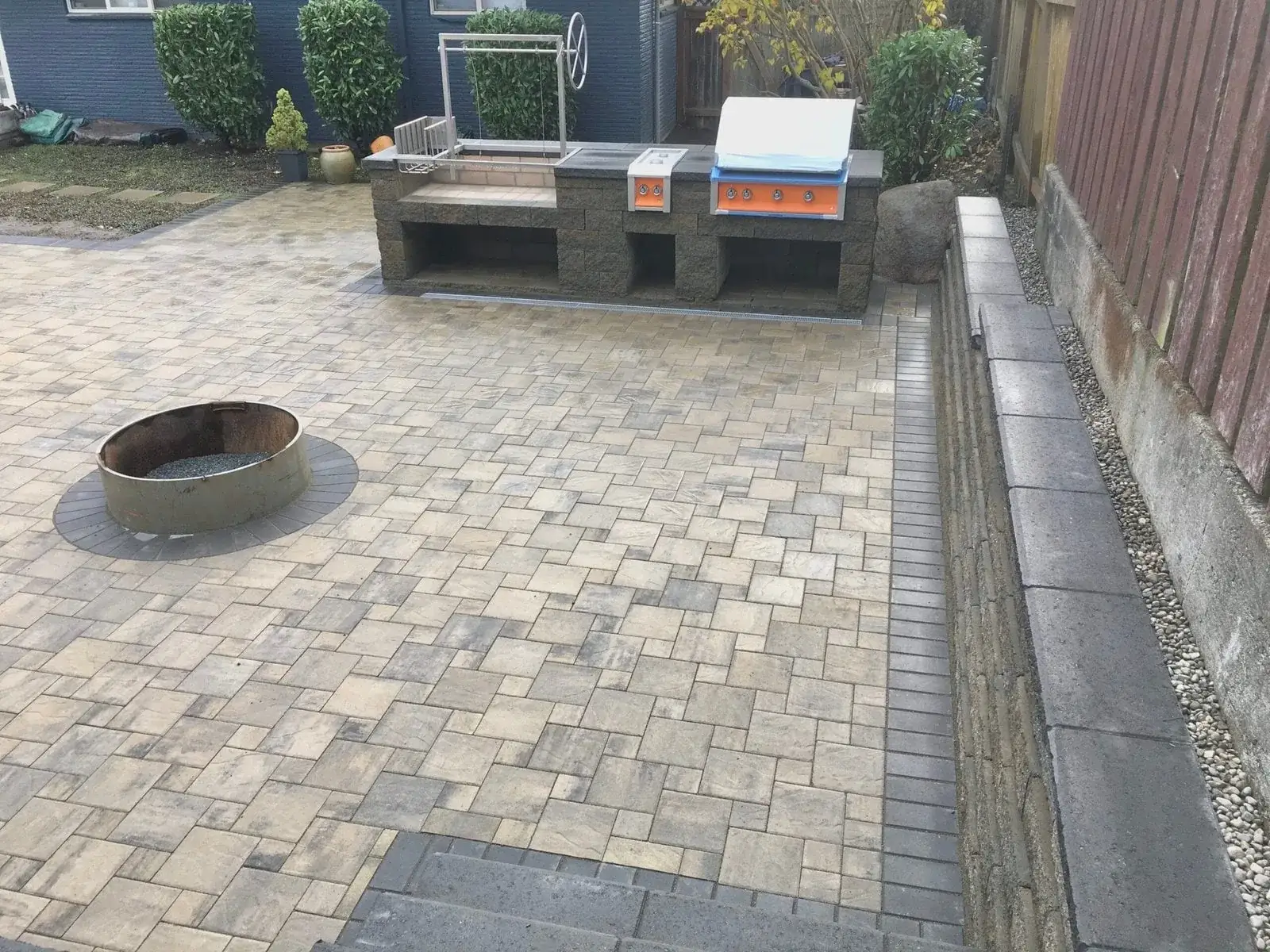
We come out, look at the ground, and put a fixed written price together. No deposit, and it does not change once agreed.
Free estimate
Three minutes on the form. We reply during office hours, Monday – Friday, 9:00 AM – 7:00 PM, and we come out and look at the site before quoting anything.
Or call (425) 331-9811
Thank you — we have your details. We reply during office hours, Monday – Friday, 9:00 AM – 7:00 PM. If it is urgent, call (425) 331-9811.