A large share of Seattle’s housing stock is on lots of three to five thousand square feet, and once you subtract the house and the parking the back garden is frequently under eight hundred. Capitol Hill, Ballard, Green Lake, lower Queen Anne — the same shape repeats across all of them.
These gardens are not small versions of big gardens. They want different decisions.
Stop trying to fit a lawn into it
This is the single change that most reliably improves a small Seattle garden, and it is the hardest one to persuade people of.
Under roughly four hundred square feet, a lawn in this city is shaded by the house and by the neighbours for most of the day, stays damp from October to April, and wears through to bare soil exactly where people walk. It also needs a mower, which on a lot with no shed and no garage has to live somewhere.
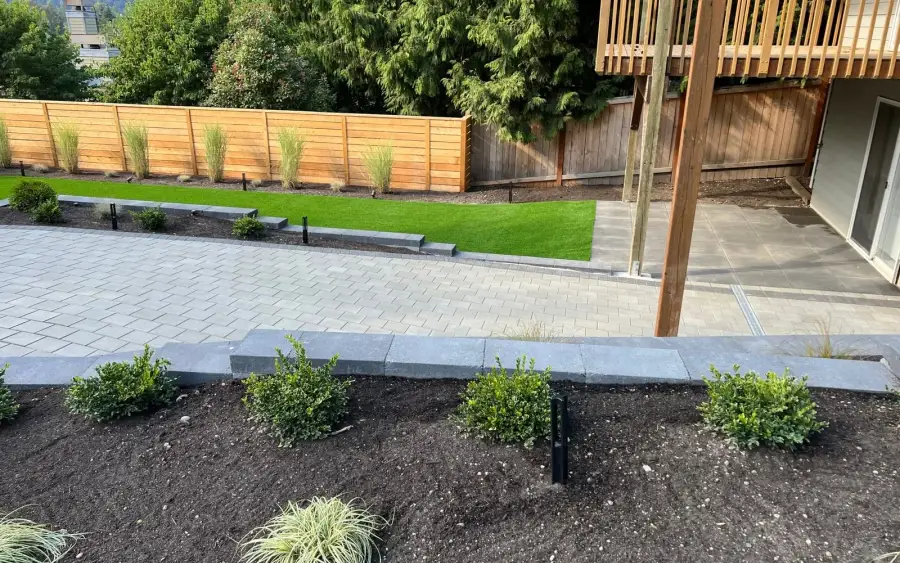
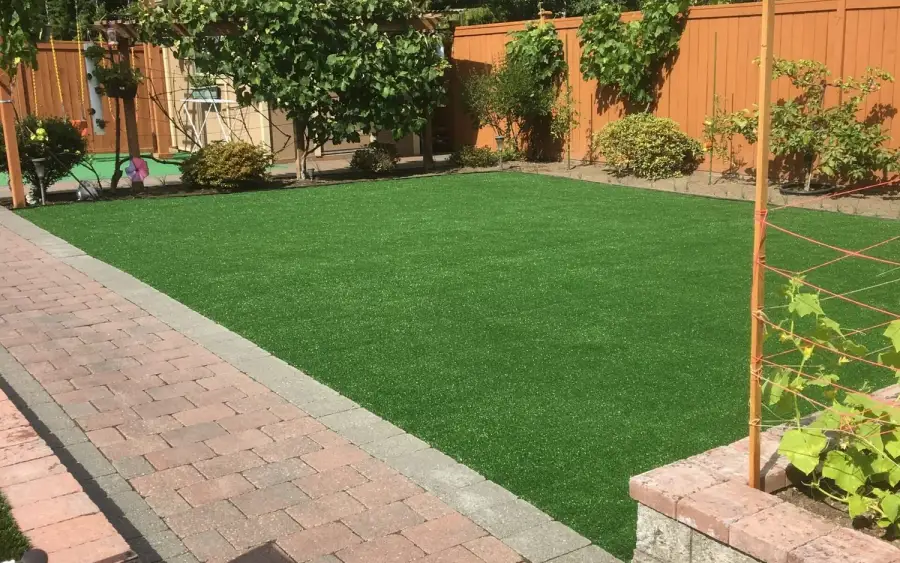
What replaces it: pave the majority of the space to a size that genuinely fits a table and chairs, and keep any green area small, deliberate and either turf or planted rather than mown grass.
Get planting depth without losing floor area
A conventional bed at ground level takes floor space away from a garden that has very little, and the planting in it competes with foot traffic.
Raised planters along a boundary solve both. You get real soil depth — which is what actually lets a screening plant establish rather than sulk — while keeping the floor of the garden clear, and the wall of the planter doubles as an edge you can sit on.
Build them with drainage rather than as a sealed box of soil. A planter with nowhere for water to go stays waterlogged even on ground that drains perfectly well.
Use the vertical surfaces
In a garden this size the fences and walls are a larger proportion of what you see than the ground is. Treating them as surfaces rather than as boundaries changes the space substantially: a trellis with climbers, an espaliered fruit tree, a planted wall, or simply a fence stained a colour that recedes rather than one that advertises itself.
Privacy: pick your battles
You cannot screen a small city garden from every neighbouring building, and trying produces a dark box.
What works is identifying the two or three sightlines that actually bother you — a specific window, from a specific seat — and interrupting those. A narrow upright tree in the right position does more than an extra foot of fence across the whole boundary.
Overhead matters more than people expect. A pergola over the seating area does more for the feeling of privacy in an overlooked garden than any amount of screening at eye level, because most of what makes you feel watched is being looked down into.
Light it, because you see it more than you stand in it
A small garden overlooked by the back of the house is seen from inside far more often than it is used. Between October and March it is dark before five, which means an unlit garden simply stops existing for the entire season you spend most time indoors looking at it.
A handful of low-voltage fixtures — a couple of uplights on whatever the best plant is, light on the steps if there are any, something grazing a wall — turns a black rectangle into the view from the kitchen. It is the cheapest change with the largest effect on a small garden, and it is the one most often left off the list.
Seat walls beat furniture
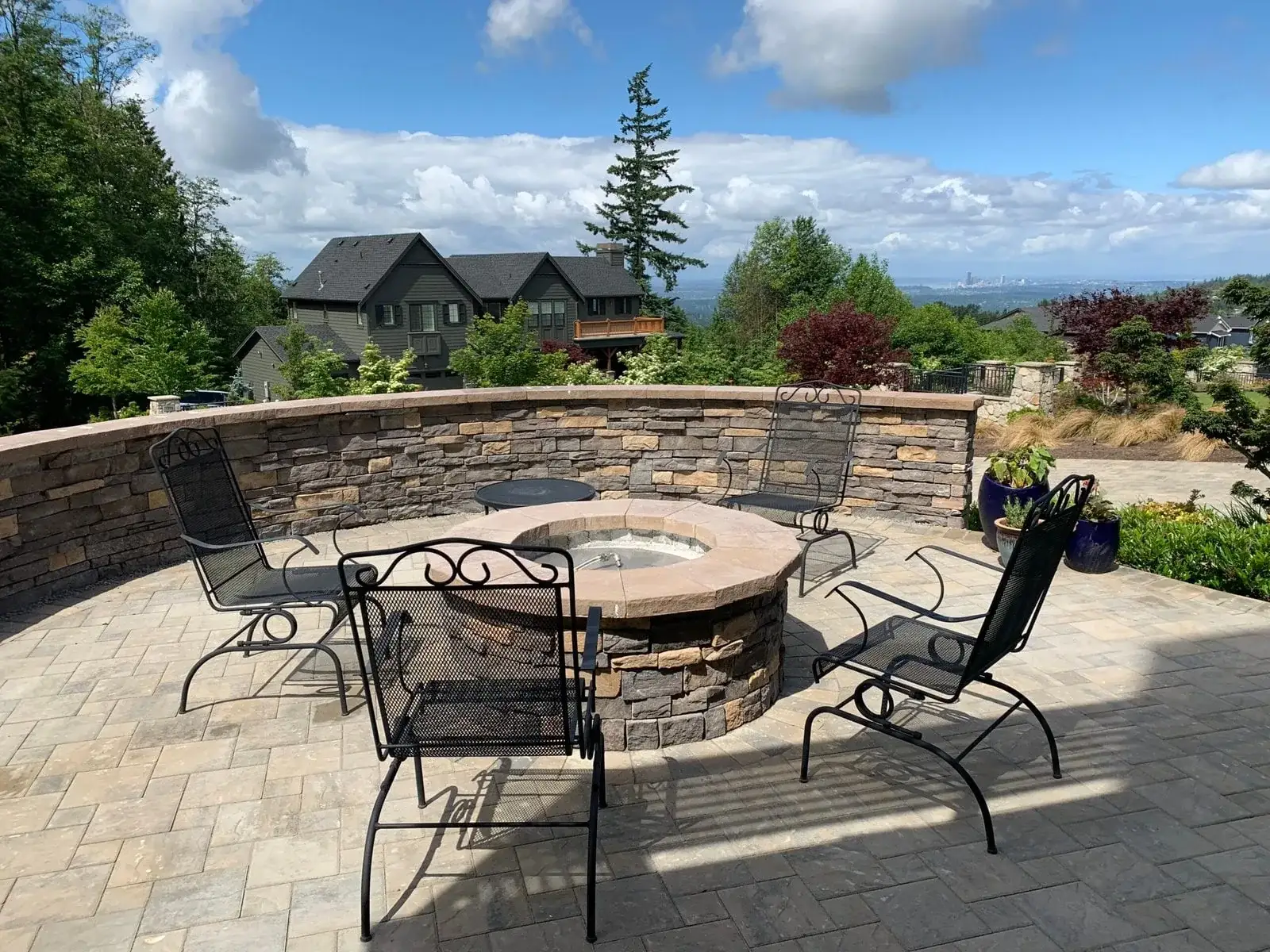
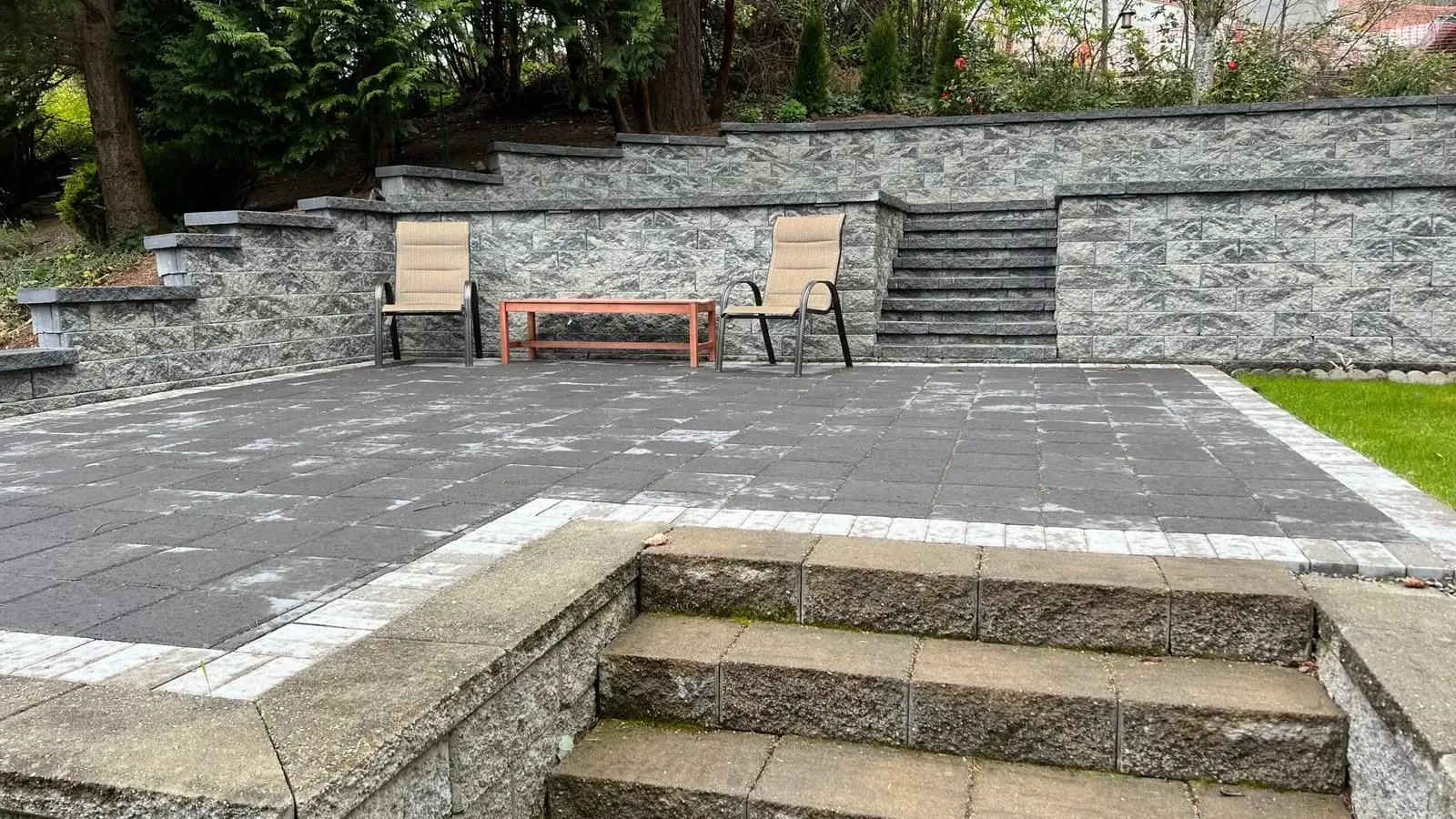
A low run of block along one edge of a patio seats four or five people permanently, costs less than the outdoor furniture it replaces, and does not have to be stored anywhere over winter. On a lot with no shed, that last point decides more than it should.
Two levels are better than one, if you already have them
If the garden already steps — and on Capitol Hill or Queen Anne it usually does — resist the urge to flatten it into one plane. Two defined levels connected by decent steps make a small garden feel considerably larger than one flat rectangle of the same area, because you cannot see all of it at once.
What matters is that the steps are properly built: consistent riser heights, a textured tread that is not lethal wet, and a real foundation under the bottom step. Uneven risers on a wet Seattle evening are how people fall.