
 Paver PatioView full size
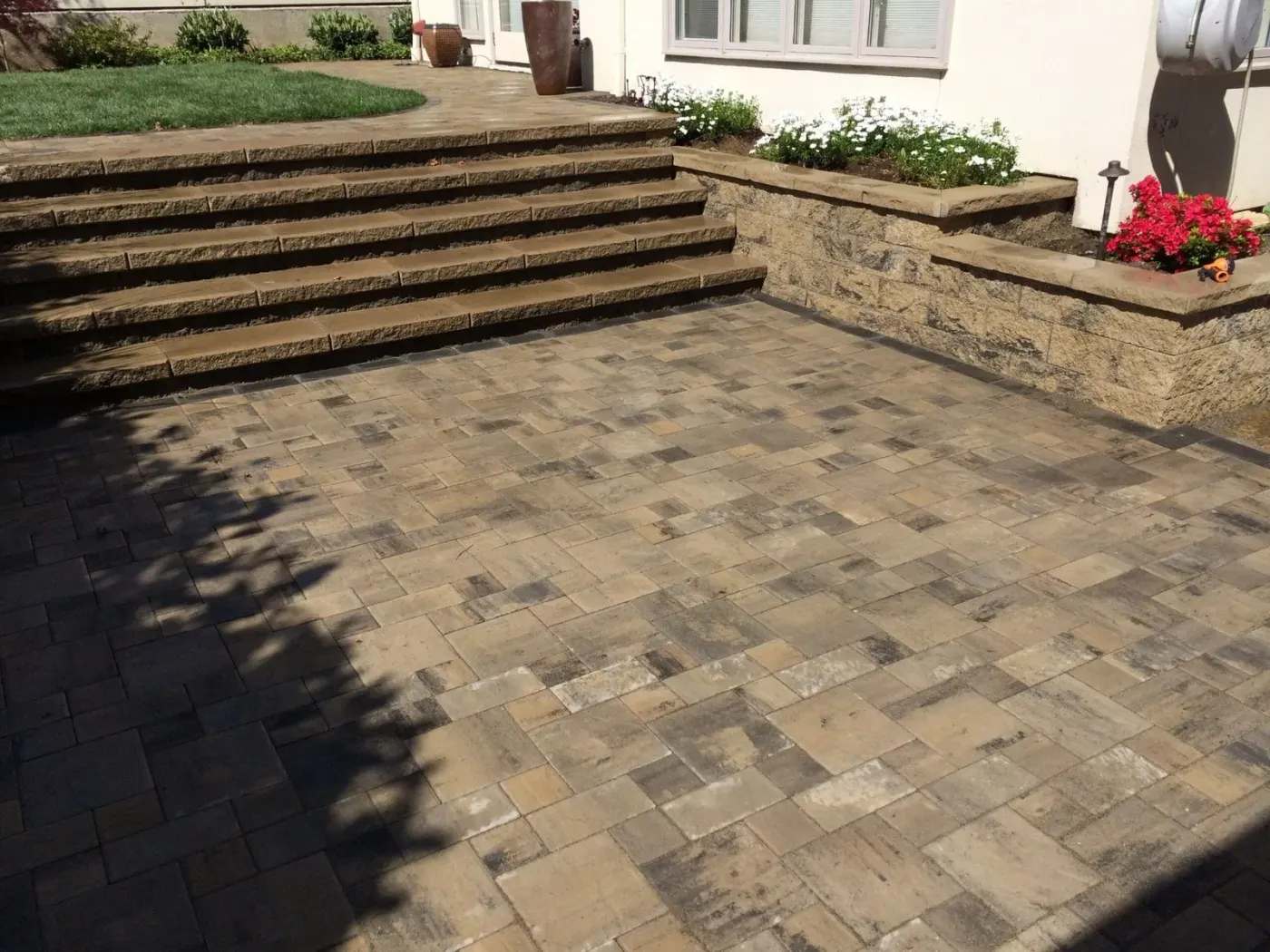
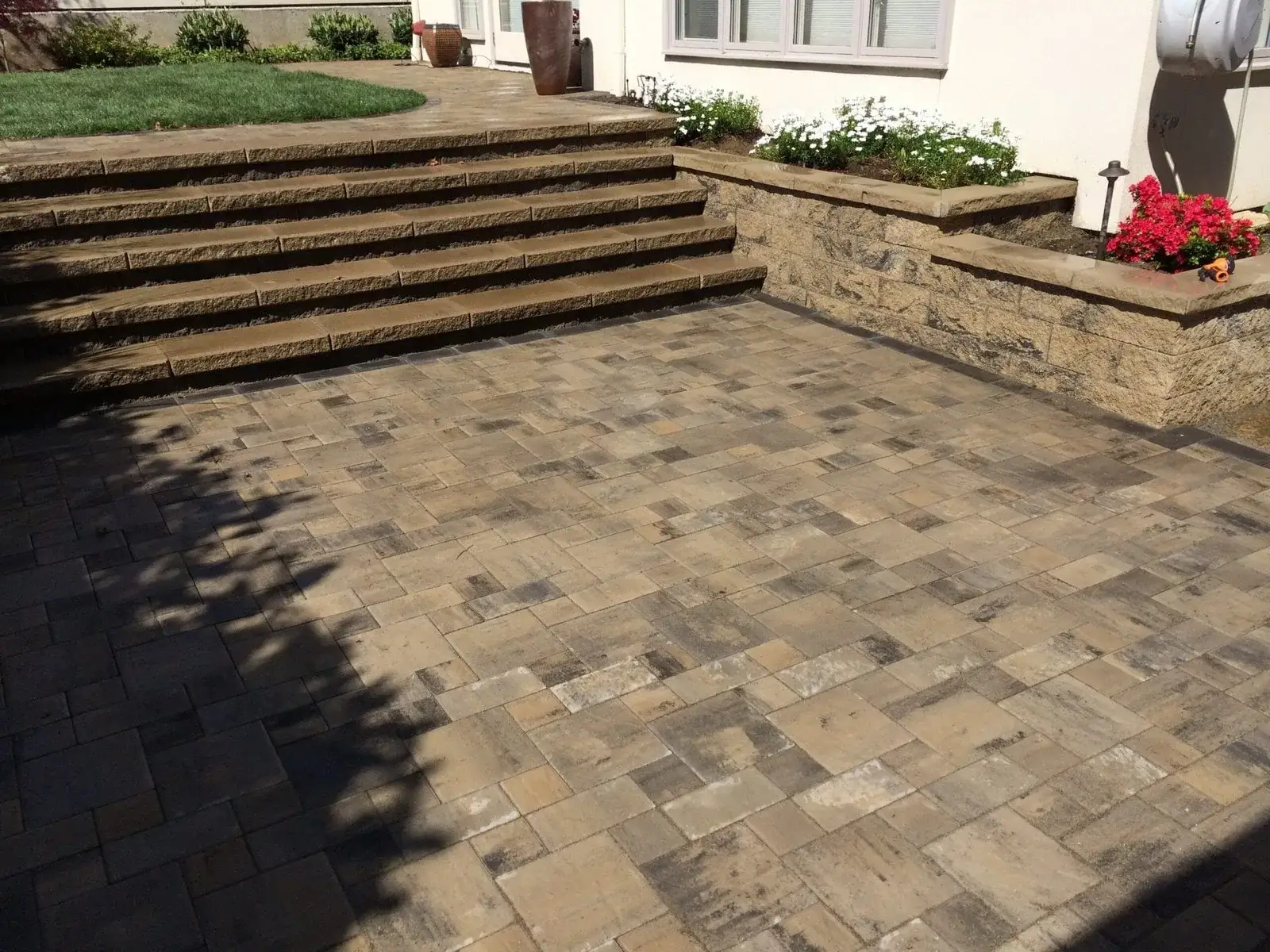
Patio with steps up to the lawn
Two levels connected properly — paver patio below, steps up to the planted lawn above.
No down payment. You pay when the project is finished.
Monday – Friday, 9:00 AM – 7:00 PM · Capitol Hill, Seattle
Hardscaping · Laurelhurst
Laurelhurst is gentle and rolling, falling steadily toward Union Bay without the severe grade that defines most Seattle waterfront-adjacent neighbourhoods. That makes the work here less about holding ground and more about finish. The ground is glacial till with the usual consequence — water sits on the hardpan under a foot or two of good topsoil — so drainage still has to be designed even though nothing is steep. What changes on these lots is the standard of detailing: gardens here are seen close and often, the houses set a level, and a patio joint or a cap overhang that would pass unnoticed elsewhere does not pass here.
Paver patio with wide steps leading up to a planted lawn on a two-level Laurelhurst garden
What we get called about
Laurelhurst is large lots and big established trees, and that combination sets the agenda. The gardens here have room for a full design — separate zones, a real route through, planting with depth — rather than the single-decision layouts that small city lots force. What has to be worked around is the canopy: mature Douglas fir, western red cedar and big-leaf maple are everywhere, they are a significant part of what the neighbourhood is, and their root plates constrain where hard surfaces can go far more than most people expect.
Worth knowing in Laurelhurst
Settle where the base can be dug before the layout is fixed if the lot has mature trees. Cutting a significant root to make a patio line work is a decision with a ten-year consequence, and it is usually avoidable by drawing the layout around the trees instead of through them.
The method
The sequence does not change between neighbourhoods — what changes is the ground it is applied to. Full detail on the hardscaping service page.
Before anything is priced. Where the water arrives, where it currently goes, and where it will go once a few hundred square feet of ground stops absorbing it. On a sloping lot this changes the design, not just the drainage line.
Walls before paving, drainage before both, and anything needing machine access before the route in is closed off. A correct sequence is most of what keeps a multi-element job from costing twice.
Wall height, Environmentally Critical Area, impervious surface limits. Three elements each individually exempt can still cross a threshold together, and finding that out mid-build is the expensive version.
Excavation to the depth the use requires, compaction in lifts, and the drainage placed as the structure goes up rather than added at the end. None of this is visible when the job is done, which is why it is where a cheap quote saves money.
Paving, wall faces, caps, stone. The part everyone is paying attention to, and the fastest part of the job when the three steps above were done properly.
Edges, jointing, the soft landscaping back in, and the levels checked against where the water is meant to go. We walk the finished fall lines with you rather than asserting them.
What it costs in Laurelhurst
Laurelhurst costs are driven by material and detail rather than by groundwork. Natural stone at $45 to $120 per square foot of finished face is common here where block would serve elsewhere. A terrace and seat wall scheme typically runs $25,000 to $70,000, with stone selection moving the number more than excavation does.
You pay after the project is fully completed.
The estimate you sign is the price you pay.
Spread the cost with no interest.
Covers hardscape work; vegetation excluded.
Local questions
General questions about this service are on the service page. These are the ones that only come up here.
Yes, and it is the thing most often underestimated on gentle lots. Glacial till does not accept water regardless of how level the surface above it is, so a patio base built shallow into till becomes a reservoir through the winter. On a slope water at least leaves; on gentle ground it stays. The specification is a base deep enough in free-draining material plus a route out to daylight or an approved discharge.
For two or three feet with a patio on one side, a seat wall usually wins — it handles the level change and gives permanent seating in one element, built at eighteen inches to the cap where people will actually sit. A retaining wall does the structural job and nothing else. Seat walls also price per linear foot rather than per square foot of wall face, which on a short run is the cheaper way to buy the same result.
Usually, and it is worth designing for early rather than discovering late. The constraint is the root plate: excavating a patio base through significant roots either damages the tree or compromises the base where it crosses them. Where a layout keeps excavation outside the critical root zone everything is straightforward. Where it cannot, the options are a raised structure over the roots or a permeable surface on a shallower base.
Frequently, and the honest reason is context rather than performance. Block with a good cap performs just as well structurally at roughly half the cost. Natural stone looks better at close range and keeps looking better for longer, which matters on a lot where the garden is used daily and the street sets a standard. On a wall that planting will hide within two seasons, block remains the sensible answer even here.
Serving Laurelhurst and surrounding neighbourhoods
Laurelhurst · Windermere edge · Sand Point Way corridor · Union Bay · Bryant edge
98105
Recent work
Paver PatioView full sizeTwo levels connected properly — paver patio below, steps up to the planted lawn above.
 Paver PatioView full size
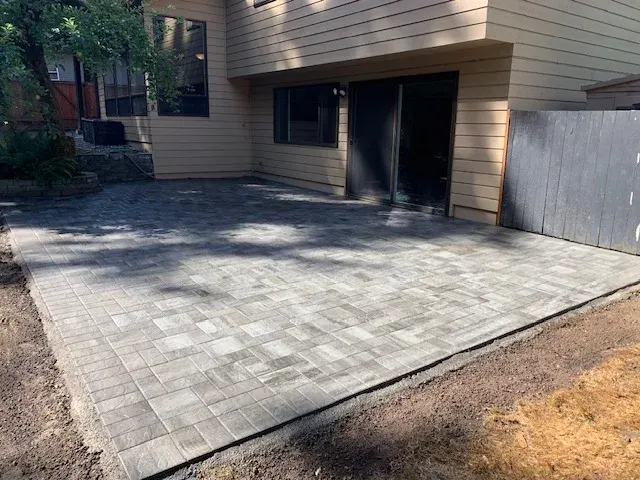
Photographed before the edges were backfilled. The base under a patio is what decides whether it is still flat in ten years, and it is the part nobody photographs.
We come out, look at the ground, and put a fixed written price together. No deposit, and it does not change once agreed.
Free estimate
Three minutes on the form. We reply during office hours, Monday – Friday, 9:00 AM – 7:00 PM, and we come out and look at the site before quoting anything.
Or call (425) 331-9811
Thank you — we have your details. We reply during office hours, Monday – Friday, 9:00 AM – 7:00 PM. If it is urgent, call (425) 331-9811.