 HardscapingView full size
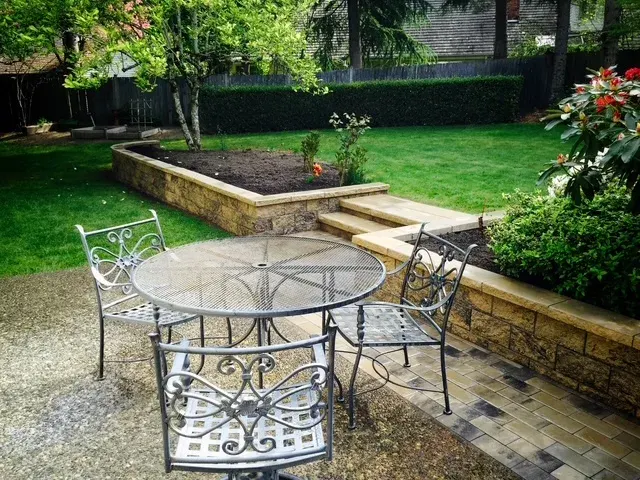
Stone seat wall and raised bed
A stone seat wall doubling as the edge of a raised bed, with steps up to the lawn and a paved terrace for the table.
No down payment. You pay when the project is finished.
Monday – Friday, 9:00 AM – 7:00 PM · Capitol Hill, Seattle
Hardscaping · Mount Baker
Mount Baker falls steadily from the ridge crest down to Lake Washington, and grade changes of twenty feet or more across a single lot are ordinary rather than exceptional. That makes this terracing country: the practical question on most of these gardens is not whether you need a wall but how many levels you want before deciding anything else. The ridge carries glacial till, and the steeper sections carry looser, less stable material with a number of parcels falling inside landslide designations — which removes the four-foot wall exemption regardless of height. We check the parcel against the map before quoting, because on this hill the designation changes the design rather than just the paperwork.
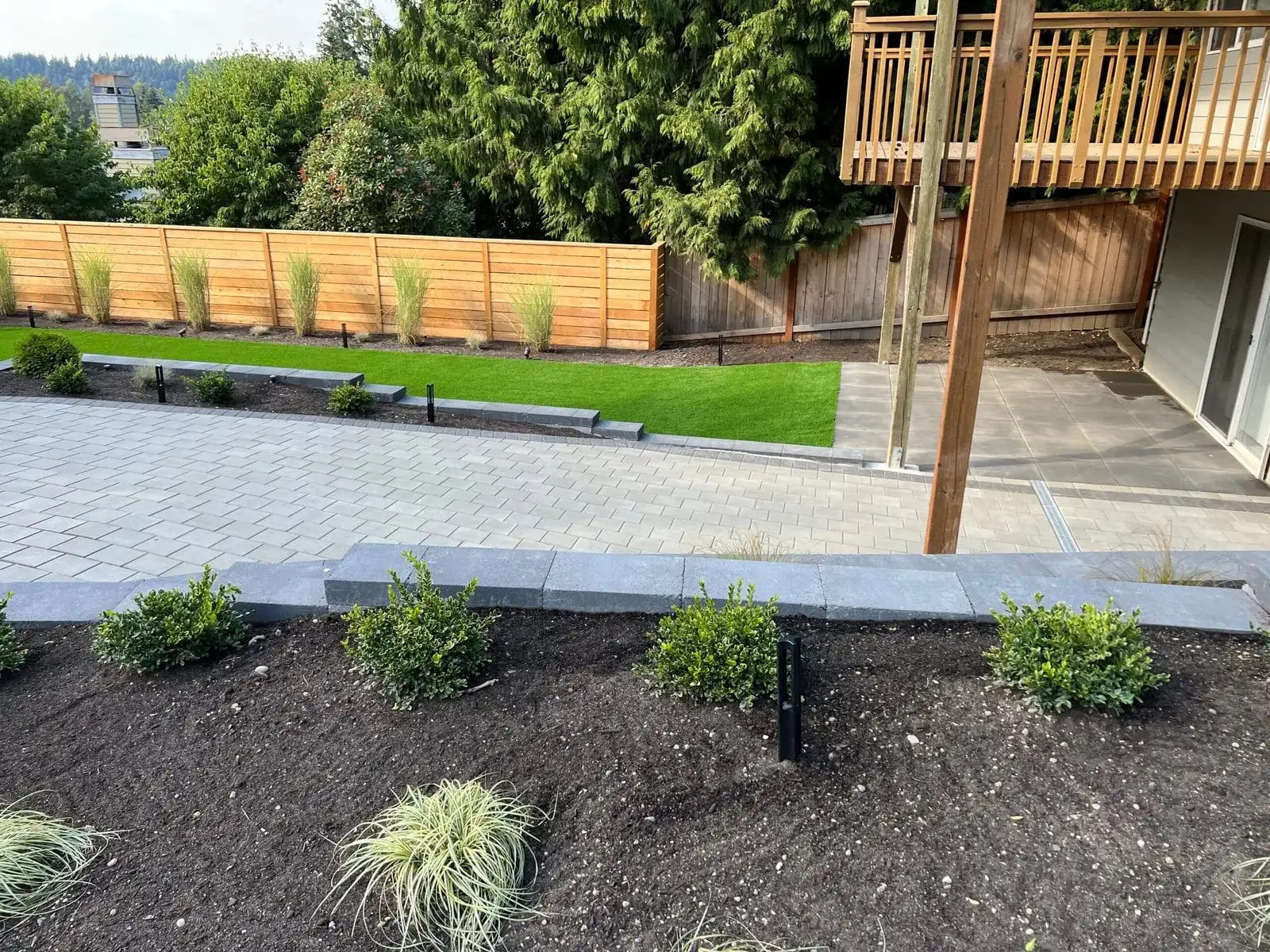
Grey paver patio with charcoal edging walls, turf lawn and new planting on a sloped Mount Baker garden
What we get called about
Mount Baker is a view neighbourhood on a serious slope, and those two facts pull in opposite directions. The fall toward Lake Washington is what the property is worth, and it is also what makes flat ground scarce. The design problem is cutting usable level platforms out of that fall without putting a wall across the sightline — which almost always means several lower terraces stepping down rather than one tall wall near the house. On the steeper parcels the ECA question applies, so the permit position gets checked before anything is quoted.
Worth knowing in Mount Baker
Decide how many levels you actually need before designing anything else. Each terrace is a wall plus fill and drainage behind it, so on this grade usable flat ground is bought by the square foot — and two good terraces usually serve better than four mediocre ones.
The method
The sequence does not change between neighbourhoods — what changes is the ground it is applied to. Full detail on the hardscaping service page.
Before anything is priced. Where the water arrives, where it currently goes, and where it will go once a few hundred square feet of ground stops absorbing it. On a sloping lot this changes the design, not just the drainage line.
Walls before paving, drainage before both, and anything needing machine access before the route in is closed off. A correct sequence is most of what keeps a multi-element job from costing twice.
Wall height, Environmentally Critical Area, impervious surface limits. Three elements each individually exempt can still cross a threshold together, and finding that out mid-build is the expensive version.
Excavation to the depth the use requires, compaction in lifts, and the drainage placed as the structure goes up rather than added at the end. None of this is visible when the job is done, which is why it is where a cheap quote saves money.
Paving, wall faces, caps, stone. The part everyone is paying attention to, and the fastest part of the job when the three steps above were done properly.
Edges, jointing, the soft landscaping back in, and the levels checked against where the water is meant to go. We walk the finished fall lines with you rather than asserting them.
What it costs in Mount Baker
Mount Baker carries the higher end of city hardscape budgets because usable ground has to be built before anything can sit on it. Terracing a falling lot into levels commonly runs $40,000 to $120,000. Where the ridge crest is flat enough to build on directly, costs drop back to ordinary city rates.
You pay after the project is fully completed.
The estimate you sign is the price you pay.
Spread the cost with no interest.
Covers hardscape work; vegetation excluded.
Local questions
General questions about this service are on the service page. These are the ones that only come up here.
As many as buys the usable area you actually want, which is a budget question more than a technical one. Each terrace is a wall plus the fill and drainage behind it, so level ground here is bought by the square foot rather than found. The useful exercise before design is deciding how much flat space you genuinely use — people frequently find two generous terraces beat four narrow ones.
It removes the four-foot exemption, so a retaining wall of any height may need a permit, and depending on the situation the design may need engineering input. A meaningful number of Mount Baker parcels fall inside one. It does not make a project impossible — we work on these lots regularly — but it changes timeline and design, and it is far cheaper to know at the quoting stage than halfway through an excavation.
Only where horizontal space is genuinely too tight to step back — a narrow side return, or a boundary you cannot build into. Everywhere else terracing wins on this hill: two four-foot walls generally cost less than one eight-foot wall, avoid the engineering and permit the tall one triggers, give planting space between levels, and keep the lake view that a single tall wall would wall off.
Through your garden, unless the design gives it somewhere better. Water from the ridge above concentrates as it comes down, and hardscape that interrupts that path without providing an alternative tends to find out during the first serious storm. We design the drainage route for the whole slope first and fit the terraces and paving into it, which is the opposite order from how most people assume it works.
Serving Mount Baker and surrounding neighbourhoods
Mount Baker · Mount Baker Ridge · North Rainier edge · Leschi edge · Colman Park
98144
Recent work
We come out, look at the ground, and put a fixed written price together. No deposit, and it does not change once agreed.
Free estimate
Three minutes on the form. We reply during office hours, Monday – Friday, 9:00 AM – 7:00 PM, and we come out and look at the site before quoting anything.
Or call (425) 331-9811
Thank you — we have your details. We reply during office hours, Monday – Friday, 9:00 AM – 7:00 PM. If it is urgent, call (425) 331-9811.